
Environment / Information Management Solutions
Comments: No Comments
For many organizations, hazardous materials management is not constrained by a lack of effort. The bigger challenges often lie in disconnected systems, lean staffing, and the ongoing need to keep regulatory information, records, and institutional knowledge organized. Southeast Missouri State University (SEMO) faced these pressures across a complex campus environment and needed a practical, sustainable way to manage environmental compliance and hazardous materials without adding unnecessary software complexity.
The case study below highlights how effective hazardous materials management depends less on buying a standalone system and more on designing clear processes, centralizing reliable information, and making compliance tasks easier for the people who perform them. SEMO’s solution did just that by leveraging tools already familiar to many organizations: Microsoft SharePoint and the Power Platform.
Challenge: Too Many Requirements, Too Few Resources
SEMO’s environmental, health, and safety (EHS) responsibilities span a broad campus footprint: approximately 9,000 students, 1,100 employees, 397 acres, 99 buildings, about 100 laboratories, and 17 residence halls. The University’s EHS profile further includes dual-fuel and natural gas boilers, generators, oil storage tanks, a Title V air permit, a Municipal Separate Storm Sewer System (MS4) permit, a Spill Prevention, Control, and Countermeasure (SPCC) Plan, and hazardous waste small quantity generator (SQG) obligations.
The scale of SEMO’s operation creates a significant documentation and coordination burden, especially when hazardous materials, environmental permits, inspections, training, and waste activities must be managed consistently. And with only two EHS Facilities Management team members, the University needed processes that were visible, repeatable, and less dependent on individual staff capacity to manage, sustain, and communicate compliance.
Drivers: Practical Needs, Budget Constraints, and Continuity
SEMO’s immediate need was not to collect more EHS information; it was to make that information usable. SEMO needed better systems for managing general EHS information, Safety Data Sheet (SDS) management, chemical inventory management, and hazardous waste tracking, along with a way to preserve institutional knowledge and maintain continuity when staffing changes occurred.
Budget was also a design constraint. Commercial EHS software can be expensive and difficult to justify within a Facilities Management budget, so SEMO needed a solution that delivered meaningful functionality while avoiding a major new software investment.
Solution: A Compliance-Focused SharePoint and Power Platform Management System
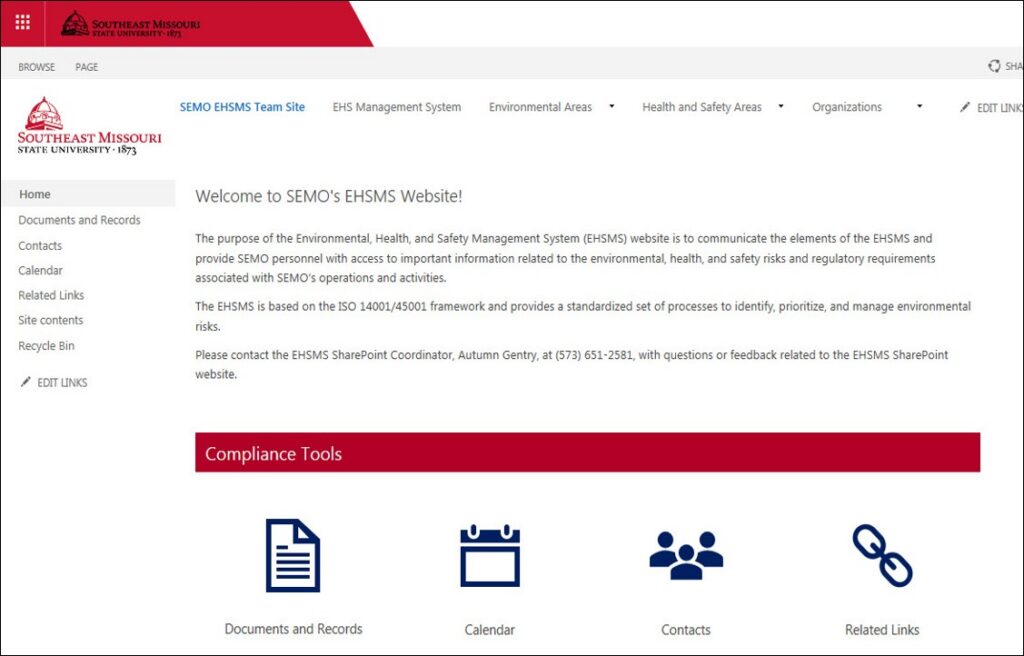
SEMO worked with KTL to build the system from a compliance-first foundation. The project began with an environmental compliance audit and report, followed by an EHS management system assessment. Those findings informed development of a broader EHS compliance management system that used SEMO’s existing Microsoft 365 environment and the Power Platform to connect webpages, documents, data, mobile forms, and automated notifications in one familiar platform.
Recent enhancements focused on hazardous materials management capabilities within the larger EHS compliance management system. Each tool was designed to address a specific operational need: knowing what materials are on campus, standardizing waste pickup requests, documenting waste determinations, and maintaining training records.
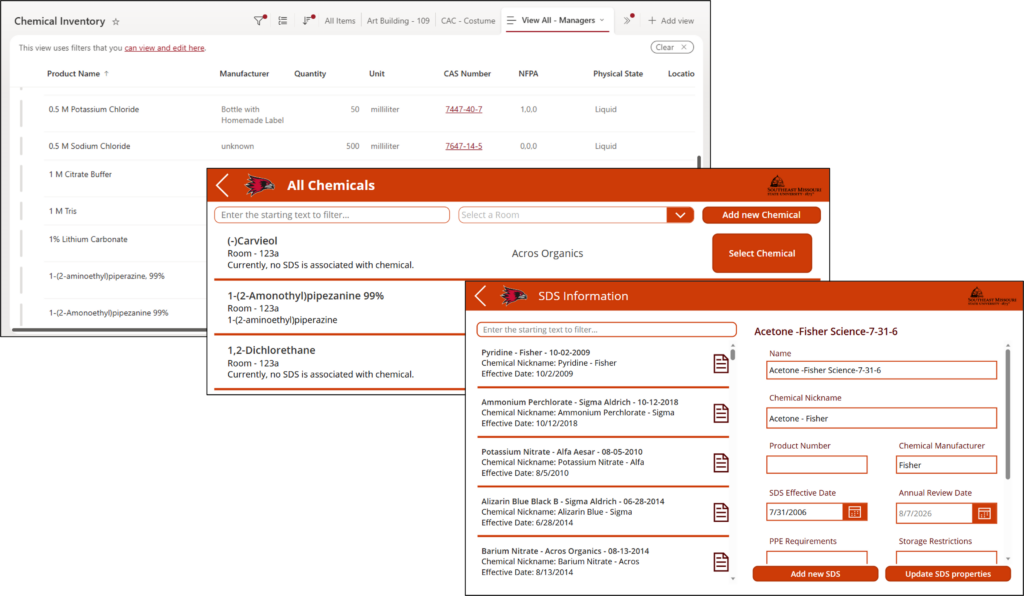
- Chemical Inventory Tool gives SEMO a structured way to view and manage chemicals throughout campus. Chemicals are associated with rooms and maintained alongside PDFs of related SDSs, inventory details, hazard information, and CAS numbers. Through a web-based interface, users can search, filter, and access records for the rooms they manage, improving visibility into what materials are present, where they are located, and what hazards are associated with them. The Chemical Inventory Tool also generates a list of chemicals that need to be reported, making regulatory reporting easier and more streamlined.
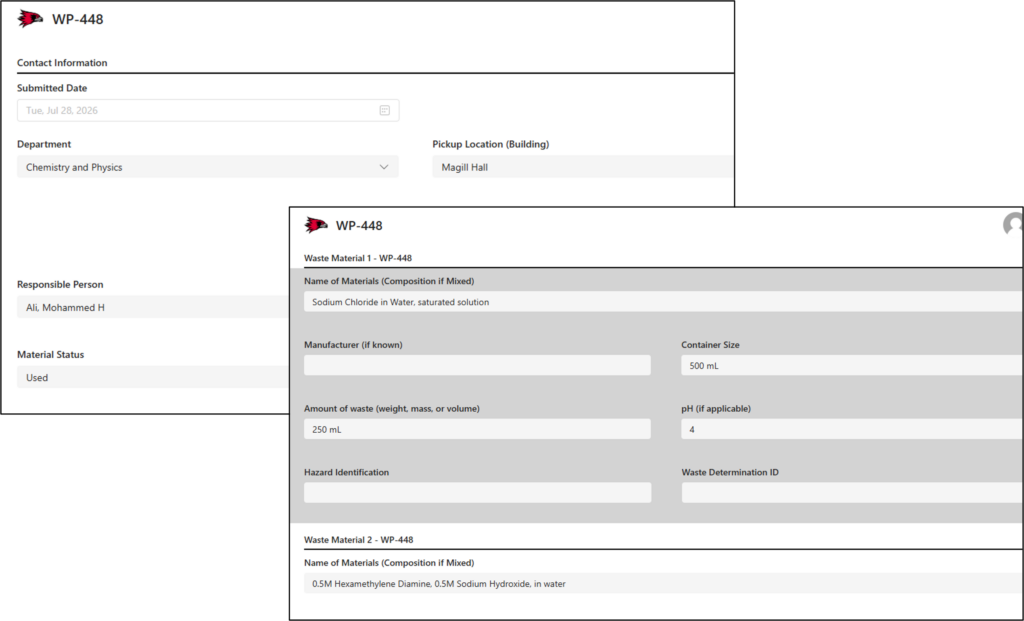
- Waste Pickup Process and Notification Workflow allows staff to request waste chemical pickups through a defined process instead of relying on informal disposal decisions. The workflow supports request submission, routing to EHS, waste determination, and notifications. This reduces manual follow-up, improves response consistency, and creates a clearer record of pickup activity.
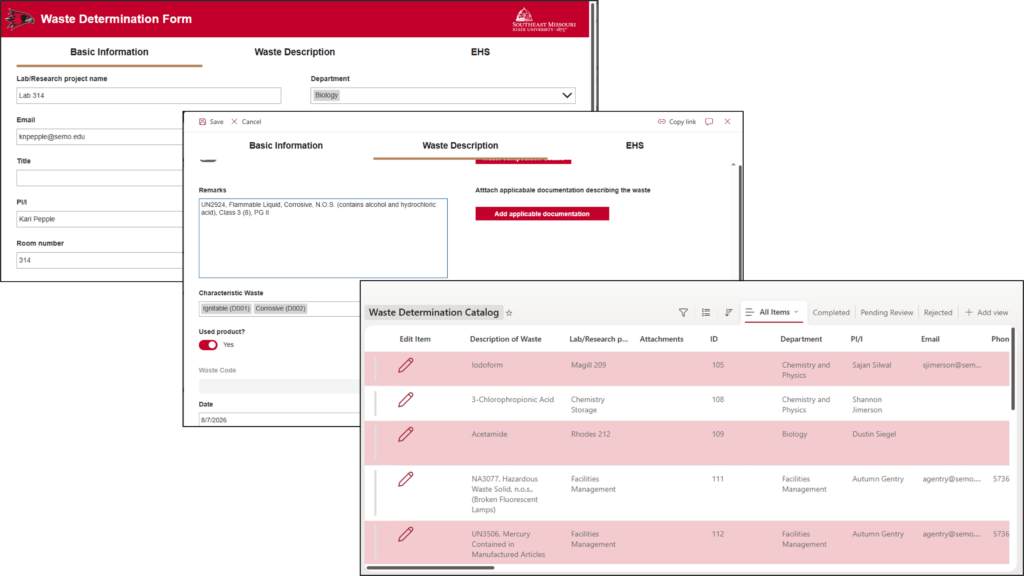
- Waste Determination Form supports the Waste Pickup Process by providing a structured process for disposal decisions. It captures basic information, waste properties, characteristics, constituents, attachments, RCRA values, review status, and EHS determinations. Completed waste determinations can then be referenced in future waste pickups to support proper disposal.
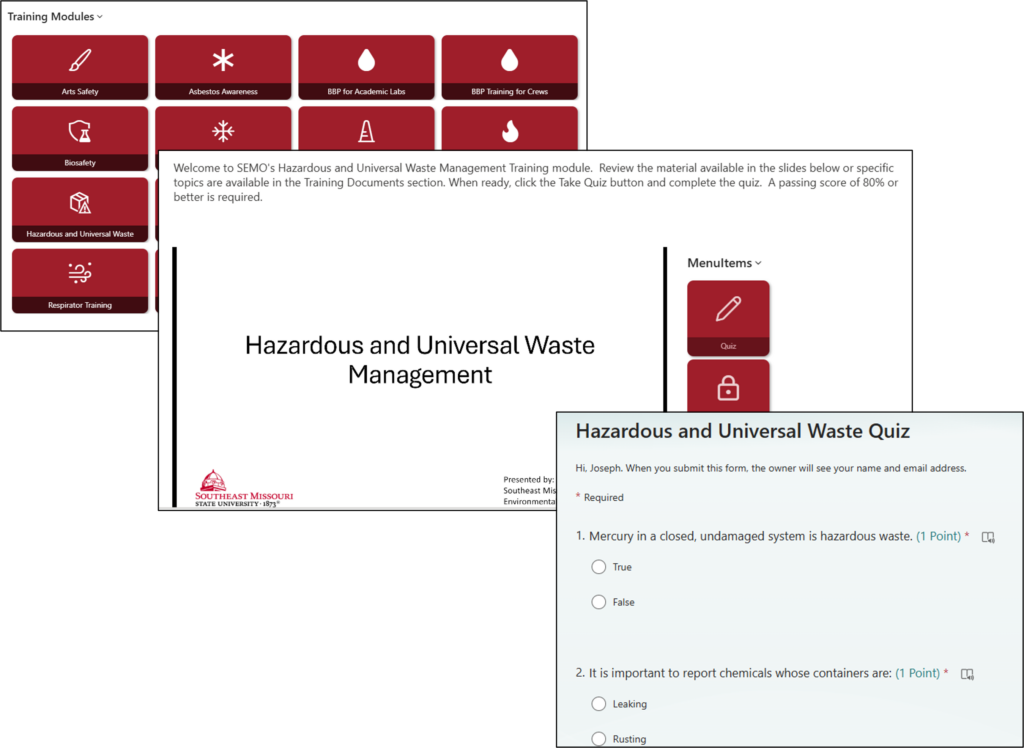
- Lab Safety Training Module supports standardized training delivery and documentation for students and faculty using University laboratories. This helps SEMO maintain training records and reinforce consistent expectations for personnel working with hazardous materials.
Results and Benefits
By developing an EHS compliance management system with dedicated hazardous materials management tools in SharePoint and the Power Platform, KTL helped SEMO create a more sustainable model for managing EHS compliance. The system centralizes records, improves document retrieval, supports regulatory inspection readiness, monitors performance, and creates a stronger foundation for continual improvement. It also captures institutional knowledge, so essential processes are less dependent on one person’s habits, memory, or manner of organizing files.
For organizations already using Microsoft 365, this approach can reduce barriers to adoption because users work in a familiar environment, IT can support the platform internally, and the organization can adapt forms, lists, workflows, dashboards, and pages as needs evolve. As SEMO has demonstrated, effective EHS compliance and hazardous materials management do not always require a large software purchase. With the right framework, clear process design, and thoughtful use of SharePoint and the Power Platform, organizations can centralize information, reduce administrative burden, preserve institutional knowledge, and strengthen regulatory compliance using tools they already have.tralize information, reduce administrative burden, preserve institutional knowledge, and strengthen regulatory compliance.