Hazardous Materials Management Built through MS 365
For many organizations, hazardous materials management is not constrained by a lack of effort. The bigger challenges often lie in disconnected systems, lean staffing, and the ongoing need to keep regulatory information, records, and institutional knowledge organized. Southeast Missouri State University (SEMO) faced these pressures across a complex campus environment and needed a practical, sustainable way to manage environmental compliance and hazardous materials without adding unnecessary software complexity.
The case study below highlights how effective hazardous materials management depends less on buying a standalone system and more on designing clear processes, centralizing reliable information, and making compliance tasks easier for the people who perform them. SEMO’s solution did just that by leveraging tools already familiar to many organizations: Microsoft SharePoint and the Power Platform.
Challenge: Too Many Requirements, Too Few Resources
SEMO’s environmental, health, and safety (EHS) responsibilities span a broad campus footprint: approximately 9,000 students, 1,100 employees, 397 acres, 99 buildings, about 100 laboratories, and 17 residence halls. The University’s EHS profile further includes dual-fuel and natural gas boilers, generators, oil storage tanks, a Title V air permit, a Municipal Separate Storm Sewer System (MS4) permit, a Spill Prevention, Control, and Countermeasure (SPCC) Plan, and hazardous waste small quantity generator (SQG) obligations.
The scale of SEMO’s operation creates a significant documentation and coordination burden, especially when hazardous materials, environmental permits, inspections, training, and waste activities must be managed consistently. And with only two EHS Facilities Management team members, the University needed processes that were visible, repeatable, and less dependent on individual staff capacity to manage, sustain, and communicate compliance.
Drivers: Practical Needs, Budget Constraints, and Continuity
SEMO’s immediate need was not to collect more EHS information; it was to make that information usable. SEMO needed better systems for managing general EHS information, Safety Data Sheet (SDS) management, chemical inventory management, and hazardous waste tracking, along with a way to preserve institutional knowledge and maintain continuity when staffing changes occurred.
Budget was also a design constraint. Commercial EHS software can be expensive and difficult to justify within a Facilities Management budget, so SEMO needed a solution that delivered meaningful functionality while avoiding a major new software investment.
Solution: A Compliance-Focused SharePoint and Power Platform Management System
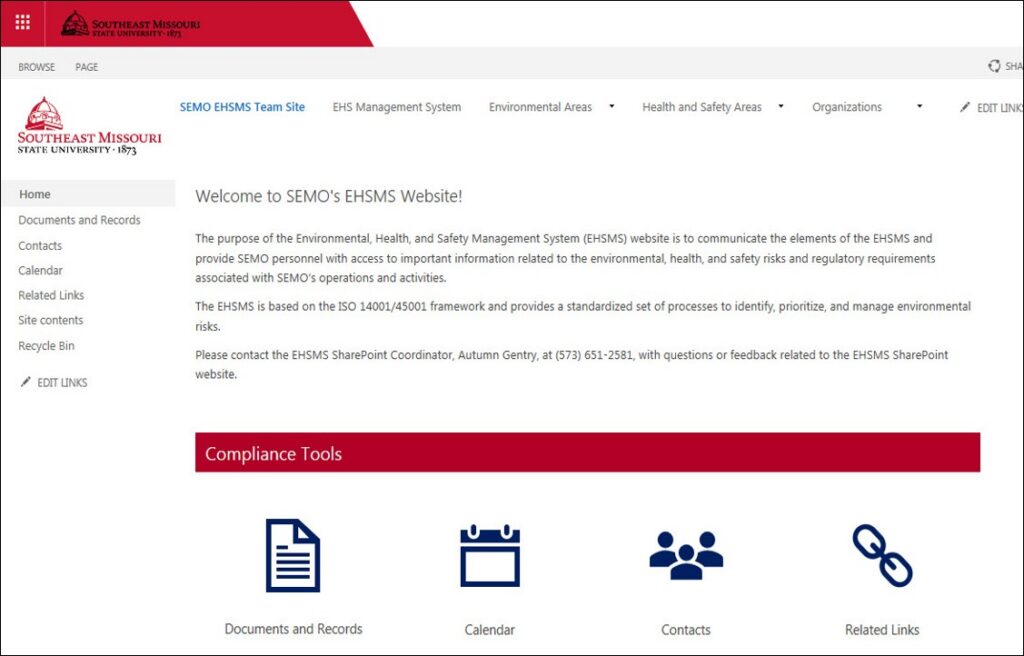
SEMO worked with KTL to build the system from a compliance-first foundation. The project began with an environmental compliance audit and report, followed by an EHS management system assessment. Those findings informed development of a broader EHS compliance management system that used SEMO’s existing Microsoft 365 environment and the Power Platform to connect webpages, documents, data, mobile forms, and automated notifications in one familiar platform.
Recent enhancements focused on hazardous materials management capabilities within the larger EHS compliance management system. Each tool was designed to address a specific operational need: knowing what materials are on campus, standardizing waste pickup requests, documenting waste determinations, and maintaining training records.
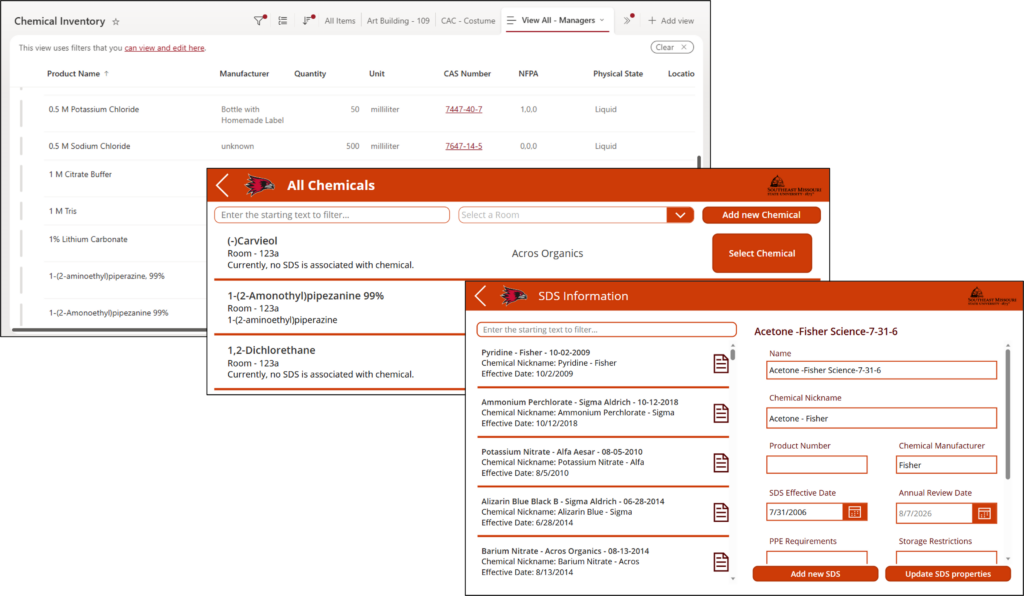
- Chemical Inventory Tool gives SEMO a structured way to view and manage chemicals throughout campus. Chemicals are associated with rooms and maintained alongside PDFs of related SDSs, inventory details, hazard information, and CAS numbers. Through a web-based interface, users can search, filter, and access records for the rooms they manage, improving visibility into what materials are present, where they are located, and what hazards are associated with them. The Chemical Inventory Tool also generates a list of chemicals that need to be reported, making regulatory reporting easier and more streamlined.
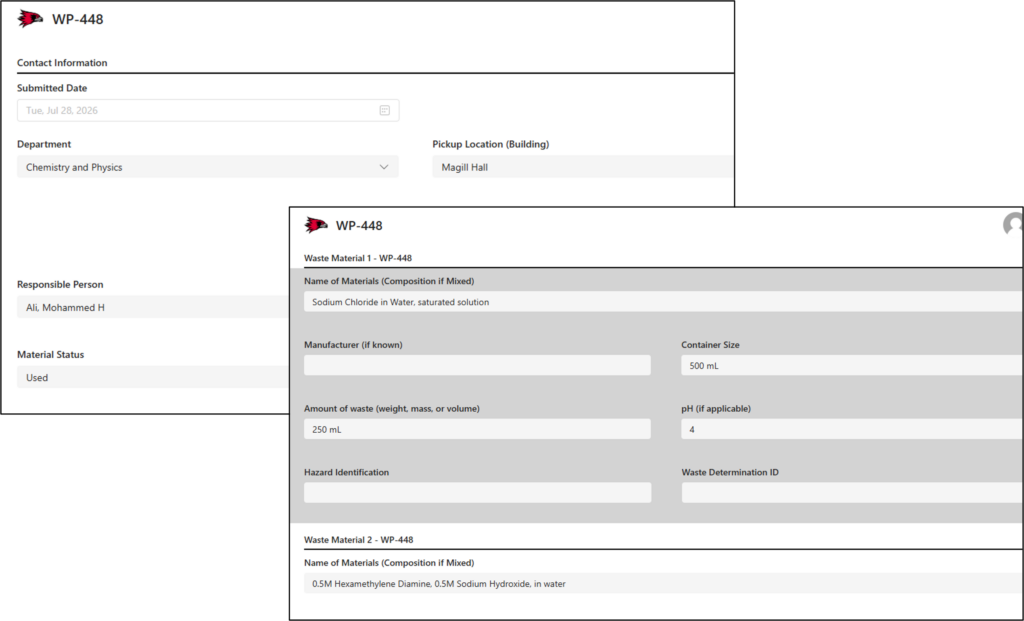
- Waste Pickup Process and Notification Workflow allows staff to request waste chemical pickups through a defined process instead of relying on informal disposal decisions. The workflow supports request submission, routing to EHS, waste determination, and notifications. This reduces manual follow-up, improves response consistency, and creates a clearer record of pickup activity.
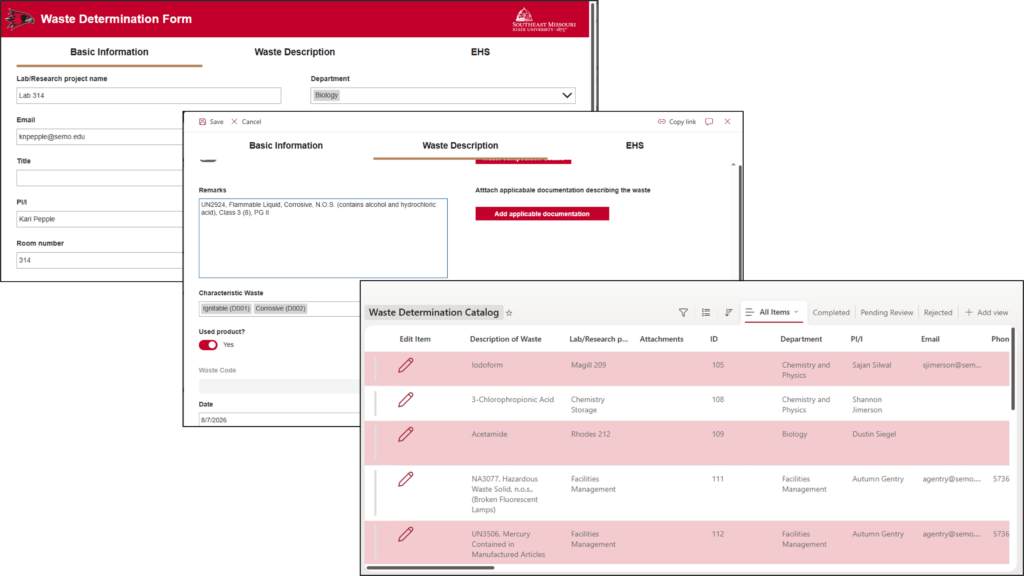
- Waste Determination Form supports the Waste Pickup Process by providing a structured process for disposal decisions. It captures basic information, waste properties, characteristics, constituents, attachments, RCRA values, review status, and EHS determinations. Completed waste determinations can then be referenced in future waste pickups to support proper disposal.
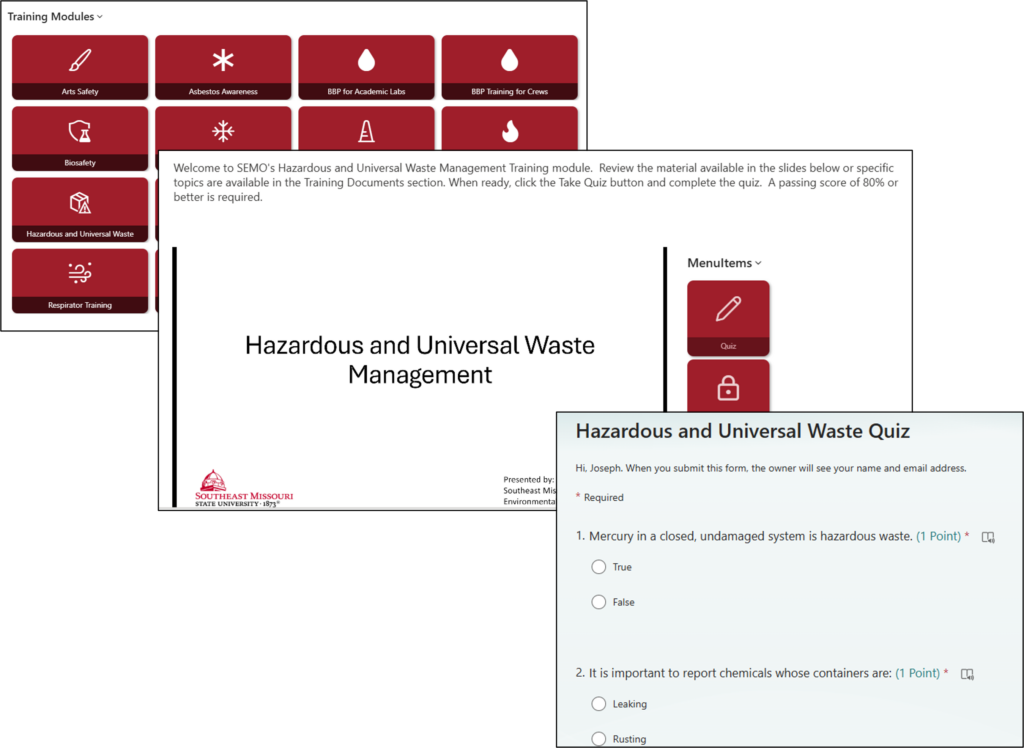
- Lab Safety Training Module supports standardized training delivery and documentation for students and faculty using University laboratories. This helps SEMO maintain training records and reinforce consistent expectations for personnel working with hazardous materials.
Results and Benefits
By developing an EHS compliance management system with dedicated hazardous materials management tools in SharePoint and the Power Platform, KTL helped SEMO create a more sustainable model for managing EHS compliance. The system centralizes records, improves document retrieval, supports regulatory inspection readiness, monitors performance, and creates a stronger foundation for continual improvement. It also captures institutional knowledge, so essential processes are less dependent on one person’s habits, memory, or manner of organizing files.
For organizations already using Microsoft 365, this approach can reduce barriers to adoption because users work in a familiar environment, IT can support the platform internally, and the organization can adapt forms, lists, workflows, dashboards, and pages as needs evolve. As SEMO has demonstrated, effective EHS compliance and hazardous materials management do not always require a large software purchase. With the right framework, clear process design, and thoughtful use of SharePoint and the Power Platform, organizations can centralize information, reduce administrative burden, preserve institutional knowledge, and strengthen regulatory compliance using tools they already have.

Environment / Food Safety / Information Management Solutions / KTL News / Quality / Safety
Comments: No Comments
Don’t Miss KTL at the WCA Annual Training Conference
KTL will be exhibiting at the Wisconsin Correctional Association’s (WCA) 2026 Annual Training Conference in Wisconsin Dells September 20-22, 2026. WCA hosts this annual statewide conference to bring together correctional professionals, students, and leaders across the criminal justice system. The event supports collaboration, professional development, and meaningful dialogue around the future of corrections.
Be sure to stop by and visit KTL at our exhibit booth (#18). We’ll be sharing more about our EHS, food safety, and Microsoft 365 information management solutions. We look forward to connecting with you in the Dells!

KTL to Present on Information Management and Safety Culture
KTL will be a featured presenter and exhibitor at the 2026 Chicagoland Safety, Health & Environmental Conference in Naperville, Illinois, September 14-16, 2026. The Conference provides timely and relevant environmental management, safety, health, professional development and OSHA/EPA compliance training to EHS professionals, business owners, facility managers, plant managers, supervisors, safety committee members, human resources managers, municipalities, and others who have safety, health, and environmental management and compliance responsibilities.
KTL Sessions
Session T05: EHS Data Management: A DIY Approach | Tuesday, September 15, 8:30-10:00 am CT
Building an EHS compliance management system doesn’t have to be complicated or expensive—not when most companies already have the software they need. Learn how to build data management tools to collect, track, and report EHS compliance information using the latest Microsoft 365 and Power Platform apps. This session will walk through key features and functionality of an EHS compliance management system, discuss the importance of a plan-do-check-act development approach, and provide tips to ensure successful development and implementation. See working examples and hear directly from EHS and IT experts on how to leverage familiar Microsoft tools to cost-effectively elevate EHS processes and management systems and drive ongoing compliance.
Session W18: Framework for Creating a Best-in-Class Safety Culture | Wednesday, September 16, 1:15-2:45 pm CT
High-profile incidents in industries from energy to manufacturing demonstrate that safety compliance alone is not enough—organizational culture determines whether safety systems thrive or fail. Consistent with OSHA’s Recommended Practices for Safety and Health Programs and ISO 45001, this session outlines a practical framework for building a best-in-class safety culture focused on ten key attributes: leadership, values, goals and initiatives, organization and structure, employee engagement, resource allocation, systems and standards, metrics and reporting, continual learning, and verification and auditing. This presentation will help professionals create a Safety Culture Action Plan that moves the organization beyond short-term initiatives toward sustainable cultural excellence through proven implementation techniques. Participants will gain actionable insights to strengthen their own safety cultures, improve safety outcomes, reduce incidents, and create organizational resilience.
Stop by KTL’s booth (#101) to talk more about your safety, health, and environmental needs. We look forward to connecting with you in Naperville!

Comments: No Comments
KTL Joins WI Green Tier Panel on ISO 14001:2026
KTL is joining Wisconsin Department of Natural Resources (WDNR) Green Tier Program for a webinar on the recent changes to ISO 14001 and its implications for your environmental management system (EMS) on Tuesday, August 25 from 12:00-1:00 PM. Click here to register!
This webinar will focus on updates to the ISO 14001 standard, including:
- How to maintain conformance through your EMS.
- Expanded review of environmental conditions that impact or are impacted by your organization.
- Greater emphasis on lifecycle perspective when identifying aspects.
- New clause on managing change.
- Broader role for leadership.
- Updates to managing third-party provided processes and services.
- Alignment with Green Tier Functionally Equivalent EMS elements.
Guest speakers will include Green Tier auditors and DNR staff, who will share how the updates align with Green Tier’s Functionally Equivalent EMS and ‘superior environmental performance’ outcomes defined in law. Expert panelists include:
- April Greene, CSP, CHMM, KTL
- Douglas B. Johnson, Ph.D., KeenWorks LLC
- Kevin Lehner, Environmental Compliance Systems, Inc
- John Senter, The SenterStone Companies
- Jenni Birkholz, Green Tier Project Coordinator, WI DNR
- Weston Wegener, Green Tier Project Coordinator, WI DNR

KTL to Co-Present on Hazardous Materials Management at CUHMMC
KTL will be attending at the 2026 College & University Hazardous Materials Management Conference (CUHMMC) at the University of Minnesota – Twin Cities August 9-12, 2026. CUHMMC is the premier higher education hazmat conference, bringing together the EHS leaders from across higher education to discuss the challenges faced in an academic environment and solutions and best practices that have been implemented at peer institutions.
KTL will be co-presenting with Southeast Missouri State University (SEMO) on Using Microsoft SharePoint and the Power Platform for Hazardous Materials Management. This presentation will discuss how educational facilities can use Microsoft SharePoint and the Power Platform to develop hazardous materials data management tools. We will provide an overview of how the Microsoft platform can be used to address university-specific needs and will demonstrate tools such as a chemical inventory app, waste determination register, waste pick-up workflow, and a training management system.
We look forward to connecting with you in Minneapolis!

Environment / Food Safety / Information Management Solutions / Quality / Safety
Comments: No Comments
Tech Corner: Electronic Standards Register
Functionality: What does it do?
Certification standards help assure customers, suppliers, regulators, and stakeholders that an organization’s products, services, and management systems meet recognized best practices. These standards are not static. Requirements continue to evolve as certification bodies respond to new risks, regulatory expectations, sustainability priorities, technology changes, and global benchmarking requirements. These updates can quickly create gaps if requirements are tracked manually or inconsistently, especially for companies certified to more than one overlapping scheme.
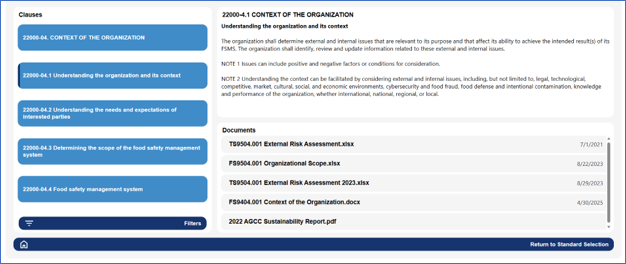
Recent and upcoming updates to SQF, FSSC 22000, ISO 14001, ISO 9001, and other ISO-based management system standards make it increasingly important for organizations to maintain a structured, current view of the requirements that apply to them. KTL’s electronic standards register organizes certification requirements into an online tool, allowing teams to track applicable clauses, map supporting documents, assign responsibilities, and monitor version changes across multiple standards.
Benefits: Why do you need it?
KTL’s electronic standards register is more than a document management tool. It provides the framework for monitoring change, assigning ownership, documenting implementation, and demonstrating that the organization has evaluated and responded to new or revised requirements in a timely, controlled manner. This is especially valuable during standards transitions to ensure the organization is complying with the most recent version.
An electronic standards register:
- Maps the organization’s documents to specific certification standard requirements.
- Identifies common requirements and allows documentation to be linked between standards, as needed.
- Maintains version control by tracking the current standard, upcoming revisions, transition deadlines, and changes that may affect procedures, records, training, and audit evidence.
- Supports proactive gap assessments when standards are revised, helping teams identify where policies, programs, forms, and responsibilities need to be updated before certification audits.
- Reduces the risk of missed updates when an organization manages multiple certification schemes, sites, departments, or document owners.
- Helps the internal audit team to complete and keep notes for the internal audit.
- Supports management review, internal audit planning, corrective action tracking, and communication across functions.
Technology Used
- Power Apps
- SharePoint
Visit KTL at the 156th Congress of Correction
KTL will be exhibiting at the American Correctional Association’s 156th Congress of Correction in Pittsburgh, PA, July 30 – August 2, 2026. The Congress features a wide array of workshops and sessions focused on cutting-edge topics for correctional facilities. The educational workshops feature the best in the business, passing on critical knowledge and engaging in important discussions, while the expansive exhibit allows attendees to interact with hundreds of companies serving the correctional industry.
Be sure to stop by and visit KTL at Booth #1106. We’ll be sharing more about our EHS, food safety, and Microsoft 365 information management solutions. We look forward to connecting with you in Pittsburgh!

Increasing Federal Attention on Microplastics
Microplastics have been found in every ecosystem on the planet—in food, beverages, and human and animal tissue. While scientists still do not fully understand the impacts of microplastics on human health and aquatic life, federal attention to microplastics is increasing.
EPA and HHS: A Coordinated National Strategy
In April 2026, the U.S. Environmental Protection Agency (EPA) and Department of Health and Human Services (HHS) made a joint announcement describing microplastics contamination as “one of the most urgent and growing public health challenges facing Americans.” The release announced major actions to study microplastics in drinking water and the human body, as described below. Together, these developments point to closer scrutiny, better testing methods, and possible future regulatory action affecting food companies, manufacturers, and other industrial sectors.
Historic Recognition as a Priority Contaminant. For the first time, EPA has included microplastics as a priority contaminant group in its Draft Sixth Contaminant Candidate List (CCL 6). The CCL is published every five years and contains a list of substances designated by EPA as potentially warranting future regulation under the Safe Drinking Water Act (SDWA). CCL 6 identifies contaminants not yet regulated but known or anticipated to occur in public water systems. The draft list includes four chemical groups, including microplastics, per- and polyfluoroalkyl substances (PFAS), pharmaceuticals, and disinfection byproducts; nine microbes; and 75 chemicals.
The inclusion of microplastics in CCL 6 is historic. It signals that microplastics are no longer viewed solely as an environmental pollutant but as a potential human health threat requiring scientific scrutiny, regulatory planning, and industry accountability.
Systematic Targeting Of MicroPlastics (STOMP) Program. As part of the coordinated national strategy to address microplastics, HHS’s Advanced Research Projects Agency for Health (ARPA-H) has launched the STOMP program. This $144 million national initiative is intended to measure, map, and remove microplastics and nanoplastics from the human body.
The STOMP program is the first federal effort aimed not just at environmental monitoring but also at understanding microplastics inside human tissues. Researchers have already detected microplastics in lungs, arterial plaques, and even the brain, yet measurement methods remain inconsistent, making it difficult to assess risk or design interventions. STOMP aims to change that by:
- Identifying which microplastics are most harmful and how they move through the body.
- Developing gold-standard detection technologies for microplastics in water and human tissue.
- Creating safe, scalable removal methods, especially for vulnerable populations such as children, pregnant women, and high-exposure workers.
Focus on Food Safety
The Food and Drug Administration (FDA) continues to work on improving how microplastics and nanoplastics are detected and assessed in food. FDA has included microplastics as a priority deliverable under its Human Foods Program chemical food safety focus area, indicating that planned actions include research to improve the agency’s ability to accurately detect, quantify, and characterize microplastics in human food.
In light of this, food and beverage manufacturing, processing, and packaging companies should anticipate increased scrutiny of microplastic contamination across the food chain. Key implications include the following:
- Water used in food processing may face new regulatory limits for microplastics, requiring upgraded filtration or monitoring systems.
- Packaging materials, especially plastics that degrade into micro- and nanoplastics, may be reevaluated for shedding risk.
- Seafood, salt, bottled beverages, and processed foods that already known to contain microplastics may become targets for new testing requirements.
- Hazard analysis frameworks (e.g., Hazard Analysis and Critical Control Points (HACCP)) may need to incorporate microplastics as an emerging contaminant category.
Implications for Industry
Manufacturers in every industry, but particularly those using plastics, solvents, or high-shear processes, should prepare for the following:
- New Monitoring and Reporting Requirements. EPA’s CCL 6 designation signals that microplastics may become regulated contaminants. Industries that discharge wastewater or rely on plastic-intensive processes may face:
- Mandatory microplastic monitoring.
- Stricter discharge permits.
- Requirements for new filtration or capture technologies.
- Supply Chain and Material Redesign. As STOMP identifies the most harmful microplastics, regulators may target specific polymers or additives. Companies may need to:
- Shift to alternative materials.
- Redesign products to minimize shedding.
- Improve durability to reduce particle generation.
- Increased Need for Environmental Services. To meet potential regulatory changes, many companies may need to implement advanced environment solutions, including:
- Microplastic sampling and analysis.
- Remediation technologies.
- Regulatory compliance strategies.
- Worker Safety Considerations. Microplastics have been detected in human lungs and arterial plaques. Industrial environments with airborne plastic dust may face:
- Updated Occupational Safety and Health Administration (OSHA) guidance.
- New personal protective equipment (PPE) or ventilation requirements.
- Exposure monitoring programs.
Proactively Adapting
Microplastics are likely to remain a growing focus for federal research and possible future regulation. As EPA, HHS, and FDA continue developing the science, companies should expect stronger scrutiny, better detection methods, and increasing pressure to understand where microplastics may enter operations, products, and supply chains. Organizations that proactively adapt by assessing potential exposure points, improving filtration, redesigning materials, and monitoring microplastic exposure will be better positioned if (or when) monitoring expectations, customer demands, or regulatory requirements expand.

Comments: No Comments
ISO 14001:2026…What You Need to Know
ISO 14001 is the international standard for Environmental Management Systems (EMS). It serves as a management tool for voluntary use by organizations to help improve environmental performance and minimize environmental risks following a plan-do-check-act (PDCA) approach. ISO 14001 was first published in 1996 by the International Standard for Organization. It has since been updated with revised versions in 2004 and 2015. The recent ISO 14001:2026 revision—published in April 2026—marks the first major update to the ISO 14001 standard since 2015.
Impetus for Change
The global sustainability landscape has shifted significantly since ISO 14001:2015 was published, prompting the 2026 updates. Organizations face more stringent regulatory requirements; greater supply chain scrutiny; and heightened demand for environmental, social, and governance (ESG) transparency and accountability. The ISO 14001:2026 updates refine, strengthen, and modernize EMS requirements to align the standard with growing environmental and sustainability pressures and increasing stakeholder expectations.
In addition, ISO 14001:2026 implements the Harmonized Structure (Annex SL) to align with other ISO management system standards. This standard structure allows for easier integration between management systems and improved efficiencies due to familiar terminology and sections. The standard also now includes at what point in the PDCA cycle each clause lands. While this isn’t new for ISO, it is new for ISO 14001:2026.
Major Clause‑Level Changes
The ISO 14001:2026 revision incorporates changes to enhance climate awareness, lifecycle responsibility, supplier oversight, and leadership accountability. The table below outlines the major clause-level changes in the revised standard.
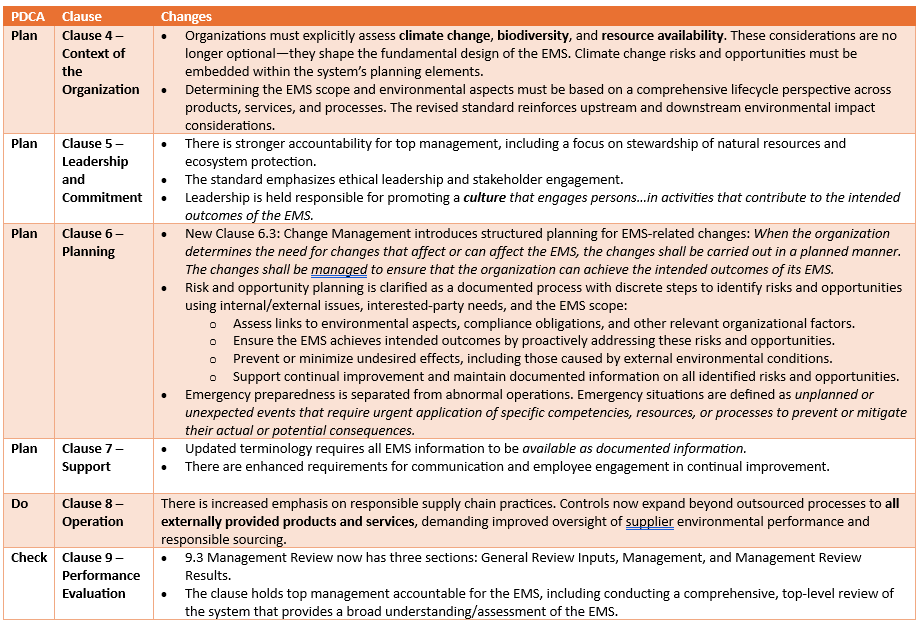
In addition to the major clause changes outlined above, the updated standard:
- Encourages the use of digital tools and data analytics to improve environmental performance and evidence‑based decision‑making.
- Introduces clearer, more accessible wording, as well as improved examples and explanations in Annex A.
- Embeds stronger expectations for integrity, transparency, and environmental governance at the leadership level.
Transition Timeline: How to Prepare
Organizations will have a three‑year transition period to switch to the new standard. Taking the time to adapt and integrate the new provisions into their operations now will help ensure certification when the transition period is over:
- Get informed! Start reading up on ISO 14001:2026 to get familiar with how the new standard is structured and how the clause changes impact your organization.
- Conduct a gap assessment to identify gaps in your existing EMS that will need to be addressed to meet new requirements. If you don’t have an existing EMS, review the requirements and determine what pieces you may already have in place to pursue certification.
- Develop an implementation plan that integrates leadership accountability, new change management processes, expanded documentation expectations, and more rigorous climate and biodiversity integration. There is a three-year transition period. Plan according to this timeline.
- Provide training. It is vital to ensure that workers and management are engaged in the EMS and that they are competent in any new skills/responsibilities that may be required.
- Put your plan into action. Update/develop your EMS to meet the ISO 14001:2026 requirements and provide verification of its effectiveness to help ensure certification when the three-year transition period is over.
Environment / KTL News / Safety
Comments: No Comments
KTL to Present on EHS at REMS Summit 2026
If you are in the Rockford area, you won’t want to miss KTL at the REMS Summit 2026, held at the NIU Rockford Campus on February 5, 2026. The REMS Summit offers Rockford-area leaders in manufacturing keynote sessions on legislative updates and strategic priorities, as well as interactive breakout sessions covering workforce development, automation/AI, supply chain strategy, HR modernization, Lean leadership, and environmental, health & safety compliance.
KTL’s April Greene, CSP, CHMM, will be presenting a breakout session on Environmental, Health & Safety: What You Need to Know. This session will:
- Provide an overview of applicable federal, state, and local occupational safety and environmental regulatory requirements.
- Explain what is required to comply with federal, state, and local environmental and occupational safety regulations (i.e., your obligations as an employer).
- Identify common compliance pitfalls and gaps in existing operations, processes, and practices.
- Outline best practices for developing practical systems to manage risk and stay compliant.