
Comments: No Comments
KTL Shares Food Safety Expertise at Master Brewers Conference
KTL will be a featured poster presenter and panelist at the 2026 Master Brewers Conference in Virginia Beach, Virginia, October 22-24, 2026. Hosted by the Master Brewers Association of the Americas (MBAA), the Master Brewers Conference brings together brewing professionals from across the globe to share technical knowledge, explore new technologies, and network with industry leaders. The Conference’s mission is to advance the brewing industry through education and collaboration.
Where to Find Us
- Campfire Session (October 22, 2027 | 11:00-12:15 am): KTL will be a featured panelist on the Q&A panel Safety Queries and Quandaries: Ask the Brewer & Food Safety Committee.
- Poster Session: KTL will be co-presenting a poster session with New Belgium Brewery on Food Safety and Regulatory Implications of Producing Nonalcoholic and Low-Alcohol Beer (NALAB).
We look forward to connecting with you in Virginia Beach!
Environment / Food Safety / Information Management Solutions / KTL News / Quality / Safety
Comments: No Comments
Don’t Miss KTL at the WCA Annual Training Conference
KTL will be exhibiting at the Wisconsin Correctional Association’s (WCA) 2026 Annual Training Conference in Wisconsin Dells September 20-22, 2026. WCA hosts this annual statewide conference to bring together correctional professionals, students, and leaders across the criminal justice system. The event supports collaboration, professional development, and meaningful dialogue around the future of corrections.
Be sure to stop by and visit KTL at our exhibit booth (#18). We’ll be sharing more about our EHS, food safety, and Microsoft 365 information management solutions. We look forward to connecting with you in the Dells!

KTL to Present on Information Management and Safety Culture
KTL will be a featured presenter and exhibitor at the 2026 Chicagoland Safety, Health & Environmental Conference in Naperville, Illinois, September 14-16, 2026. The Conference provides timely and relevant environmental management, safety, health, professional development and OSHA/EPA compliance training to EHS professionals, business owners, facility managers, plant managers, supervisors, safety committee members, human resources managers, municipalities, and others who have safety, health, and environmental management and compliance responsibilities.
KTL Sessions
Session T05: EHS Data Management: A DIY Approach | Tuesday, September 15, 8:30-10:00 am CT
Building an EHS compliance management system doesn’t have to be complicated or expensive—not when most companies already have the software they need. Learn how to build data management tools to collect, track, and report EHS compliance information using the latest Microsoft 365 and Power Platform apps. This session will walk through key features and functionality of an EHS compliance management system, discuss the importance of a plan-do-check-act development approach, and provide tips to ensure successful development and implementation. See working examples and hear directly from EHS and IT experts on how to leverage familiar Microsoft tools to cost-effectively elevate EHS processes and management systems and drive ongoing compliance.
Session W18: Framework for Creating a Best-in-Class Safety Culture | Wednesday, September 16, 1:15-2:45 pm CT
High-profile incidents in industries from energy to manufacturing demonstrate that safety compliance alone is not enough—organizational culture determines whether safety systems thrive or fail. Consistent with OSHA’s Recommended Practices for Safety and Health Programs and ISO 45001, this session outlines a practical framework for building a best-in-class safety culture focused on ten key attributes: leadership, values, goals and initiatives, organization and structure, employee engagement, resource allocation, systems and standards, metrics and reporting, continual learning, and verification and auditing. This presentation will help professionals create a Safety Culture Action Plan that moves the organization beyond short-term initiatives toward sustainable cultural excellence through proven implementation techniques. Participants will gain actionable insights to strengthen their own safety cultures, improve safety outcomes, reduce incidents, and create organizational resilience.
Stop by KTL’s booth (#101) to talk more about your safety, health, and environmental needs. We look forward to connecting with you in Naperville!
Comments: No Comments
Using Change Management to Address NALAB Food Safety Concerns
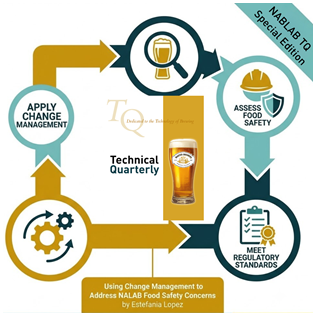
Navigating the transition into non-alcoholic brewing requires more than traditional product development. KTL’s recent article in the Master Brewer Association of the Americas (MBAA) Technical Quarterly outlines how breweries can leverage structured change management to address regulatory requirements and food safety risks when adding non-alcoholic and low-alcoholic beverage (NALAB) products. This article breaks down the essential regulatory standards, critical food safety risks, and change management strategies needed to successfully bring NALAB products to market securely. Read KTL’s MBAA Technical Quarterly article.
2026 Master Brewers Conference Poster Presentation: Highlighting NALAB Food Safety Concerns
KTL is also co-presenting a poster session with New Belgium Brewing Company on Food Safety and Regulatory Implications of Producing Nonalcoholic and Low-Alcohol Beer (NALAB) at the 2026 Master Brewers Conference in Virginia Beach, Virginia, October 22-24, 2026. In this poster presentation, the following experts from New Belgium Brewing Company and KTL explore the practical realities of integrating NALAB production into an existing brewing operation.
Maddy Frierson, Quality Scientist | mfrierson@newbelgium.com
New Belgium Brewing Company
Maddy is a food safety professional with three years of experience spanning academic research and industry application, including work in the microbiological safety of non-alcoholic beer and food safety program management in brewing operations. Her graduate research focused on evaluating the impact of pasteurization on pathogens in non-alcoholic beer and the impact of spoilage organisms on pathogen survival and growth in non-alcoholic beer products. At New Belgium Brewing Company’s Daleville, Virginia facility, Maddy works as a member of the food safety team, where she maintains and implements the site’s food safety management system to ensure compliance with GFSI certification requirements. She has also supported change management efforts associated with the site’s non-alcoholic beer production program, helping facilitate the integration of food safety principles into new processes and products. Maddy is passionate about food safety and the implementation of effective food safety management systems that protect consumers and support operational excellence.
Samantha Humphrey, Associate | shumphrey@goktl.com
KTL
Sam is a food safety and quality assurance (FSQA) professional with ten years of experience supporting the food and beverage industry. She has specialized expertise in food safety regulatory interpretation and compliance, particularly related to Good Manufacturing Practices (GMPs), Good Brewing Practices (GBPs), and Good Agricultural Practices (GAPs); GFSI certification; supply chain management; environmental monitoring and sanitation; and food microbiology. In the past few years, Sam has worked alongside several brewers, including New Belgium Brewing Company, to help build and implement GFSI-compliant food safety management systems that lead to certification. She is passionate about supporting the industry and providing best practice guidance as it pertains to mitigating food (beer) safety risk. Sam is a Certified ATD Master Trainer, Certified Professional – Food Safety (CP-FS), Preventive Controls Qualified Individual (PCQI) Lead Instructor, and Produce Safety Rule Lead Trainer, and is Juice and Seafood HACCP certified.

Comments: No Comments
KTL Joins WI Green Tier Panel on ISO 14001:2026
KTL is joining Wisconsin Department of Natural Resources (WDNR) Green Tier Program for a webinar on the recent changes to ISO 14001 and its implications for your environmental management system (EMS) on Tuesday, August 25 from 12:00-1:00 PM. Click here to register!
This webinar will focus on updates to the ISO 14001 standard, including:
- How to maintain conformance through your EMS.
- Expanded review of environmental conditions that impact or are impacted by your organization.
- Greater emphasis on lifecycle perspective when identifying aspects.
- New clause on managing change.
- Broader role for leadership.
- Updates to managing third-party provided processes and services.
- Alignment with Green Tier Functionally Equivalent EMS elements.
Guest speakers will include Green Tier auditors and DNR staff, who will share how the updates align with Green Tier’s Functionally Equivalent EMS and ‘superior environmental performance’ outcomes defined in law. Expert panelists include:
- April Greene, CSP, CHMM, KTL
- Douglas B. Johnson, Ph.D., KeenWorks LLC
- Kevin Lehner, Environmental Compliance Systems, Inc
- John Senter, The SenterStone Companies
- Jenni Birkholz, Green Tier Project Coordinator, WI DNR
- Weston Wegener, Green Tier Project Coordinator, WI DNR

Comments: No Comments
KTL Talks Safety Culture at the VPPPA 2026 Safety+ Symposium
KTL will be a featured presenter at VPPPA’s 2026 Safety+ Symposium in Nashville, Tennessee, August 30-September 2, 2026. The Safety+ Symposium is a premiere EHS&S event that provides the tools and resources to bring safety and health programs beyond compliance to excellence. It offers attendees the unique opportunity to see safety from all angles and better understand its role in the modern workplace. Designed with continuous improvement at its core, VPPPA’s Safety+ Symposium enables workers from all industries, at all levels, to better themselves as well as their workplace.
KTL will be presenting a breakout session on September 1 at 7:00 a.m. entitled Framework for Creating a Best-in-Class Safety Culture. Improving safety culture is one of the most urgent challenges facing organizations today. High-profile incidents in industries from energy to manufacturing demonstrate that compliance alone is not enough—organizational culture determines whether safety systems thrive or fail. Creating an effective Safety Culture Action Plan requires considering existing culture and honestly assessing which changes are reasonable to implement first. This session provides a tested framework, based on research and field experience, that enables professionals to recognize the building blocks of a world-class safety culture. KTL will discuss real-world practices, leadership behaviors, and organizational strategies that can elevate safety culture from good to truly best-in-class.
We look forward to connecting with you in Nashville!

KTL to Co-Present on Hazardous Materials Management at CUHMMC
KTL will be attending at the 2026 College & University Hazardous Materials Management Conference (CUHMMC) at the University of Minnesota – Twin Cities August 9-12, 2026. CUHMMC is the premier higher education hazmat conference, bringing together the EHS leaders from across higher education to discuss the challenges faced in an academic environment and solutions and best practices that have been implemented at peer institutions.
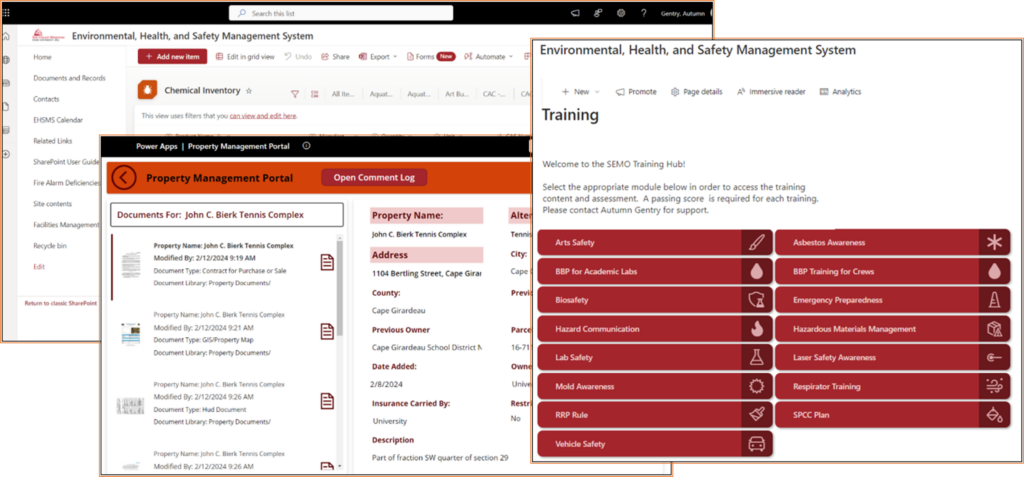
KTL will be co-presenting with Southeast Missouri State University (SEMO) on Using Microsoft SharePoint and the Power Platform for Hazardous Materials Management. This presentation will discuss how educational facilities can use Microsoft SharePoint and the Power Platform to develop hazardous materials data management tools. We will provide an overview of how the Microsoft platform can be used to address university-specific needs and will demonstrate tools such as a chemical inventory app, waste determination register, waste pick-up workflow, and a training management system.
We look forward to connecting with you in Minneapolis!
Visit KTL at the 156th Congress of Correction
KTL will be exhibiting at the American Correctional Association’s 156th Congress of Correction in Pittsburgh, PA, July 30 – August 2, 2026. The Congress features a wide array of workshops and sessions focused on cutting-edge topics for correctional facilities. The educational workshops feature the best in the business, passing on critical knowledge and engaging in important discussions, while the expansive exhibit allows attendees to interact with hundreds of companies serving the correctional industry.
Be sure to stop by and visit KTL at Booth #1106. We’ll be sharing more about our EHS, food safety, and Microsoft 365 information management solutions. We look forward to connecting with you in Pittsburgh!

Comments: No Comments
Tech Corner: What Makes a Good Compliance Management System
Many organizations use compliance management systems to help comply with industry standards (e.g., ISO, GFSI), internal requirements, and/or regulations. These systems range from manual, siloed processes to digital systems that support compliance across departments.
Not all compliance management systems deliver the same benefits. When systems are outdated, fragmented, overly manual, or not tailored, organizations can experience frustration and compliance failures. But when implemented effectively, compliance management systems reduce manual effort, increase consistency, and enhance compliance.
Key Elements of a Robust Compliance Management System
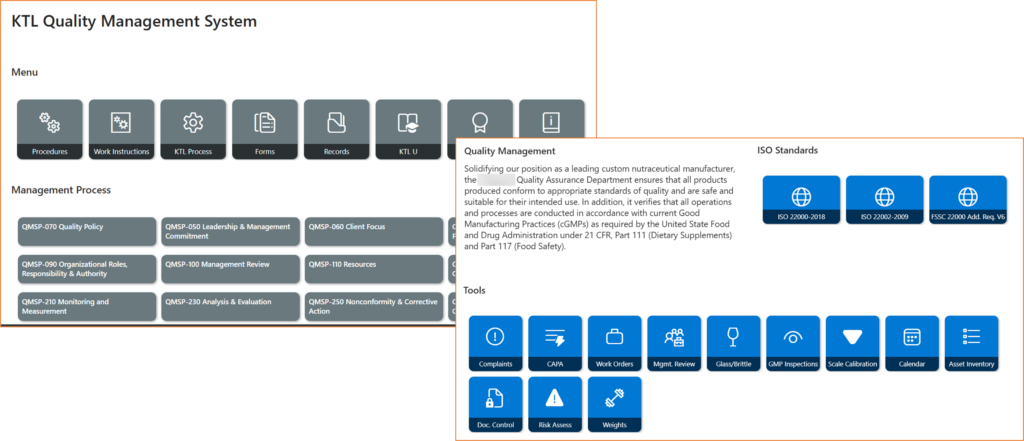
While some organizations still rely on paper, many have transitioned to a digital platform for storing compliance and management system information. However, strong compliance management systems go well beyond simply storing documents. They are designed to help organizations track, manage, and demonstrate adherence to industry standards, internal policies, and government regulations.
Instead of relying on scattered spreadsheets, emails, manual tracking, or even paper trails, a robust compliance management system centralizes compliance activities. This includes:
- Policy and procedure management.
- Regulatory and standards monitoring.
- Risk assessment and control.
- Audit preparation and reporting.
- Workflow-driven processes and data collection.
- Continuous improvement and corrective action.
When implementing a compliance management system, the following key characteristics are important in making sure the system is effective at managing compliance requirements, documents, and activities, and will deliver the most value to the organization:
- Centralization and Visibility: Provides a single reference point for compliance activities across the organization.
- Automation of Workflows: Automates repetitive tasks to reduce manual effort.
- Real-Time Monitoring and Alerts: Creates immediate visibility into compliance status, including alerts.
- Ease of Use: Employs customizable, user-friendly interfaces to improve adoption and increase user engagement.
- Audit Readiness: Enables data collection and document management to help organizations quickly demonstrate compliance during audits.
- Scalability and Flexibility: Is customizable, scalable, and adaptable for when organizations or requirements change vs. following a one-sized-fits-all approach.
KTL’s Approach
KTL’s approach to building a robust compliance management system involves leveraging Microsoft 365 and the Power Platform. This allows us to focus on leveraging what organizations already have (i.e., no new licensing) and building solutions in a phased process to add value to the organization at a comfortable pace.
The general process includes the following steps:
- Align Technology with Business Needs: KTL works to understand current processes and compliance requirements to tailor the compliance management solution to the organization’s specific needs, resources, and schedule requirements.
- Follow a Phased Approach: We don’t jump into development; rather, we typically begin with planning and assessing current systems and processes, followed by initial development, review, and refinement. This structured approach helps prioritize needs and build a solution that delivers value while evolving over time.
- Iterative and Collaborative Development: KTL builds our solutions incrementally with continuous input from stakeholders. This allows for adjustments based on feedback throughout the process to ensure the final system meets real-world needs.
- Focus on Practical Outcomes: Our goal is to help organizations centralize data, automate workflows, improve reporting, and reduce risk through a scalable compliance management system that enhances efficiency without unnecessary complexity.
Overall, KTL’s approach is about maximizing value from existing technology while delivering a flexible, user-driven compliance solution that grows with the organization.
Get Started
If your organization is looking to build a new or improve an existing compliance management system, KTL can help you navigate this process by assessing your needs and building a strong system that meets your organization’s requirements. Reach out today to schedule a no-obligation demo to discuss how a compliance management system built in the Microsoft ecosystem can improve your compliance processes.

Comments: No Comments
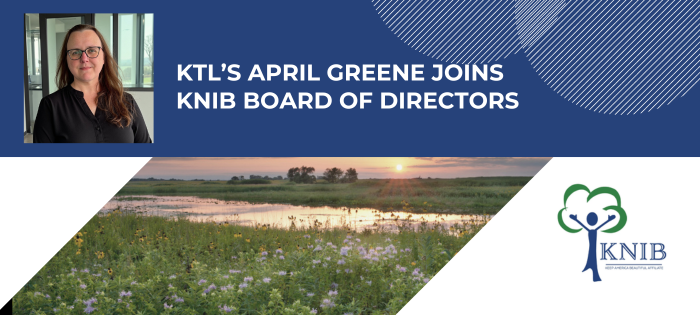
Community Involvement in Action: April Greene Joins KNIB Board
KTL Senior Associate April Greene, CSP, CHMM, was recently invited to join the Board of Directors for Keep Northern Illinois Beautiful (KNIB), an affiliate of Keep America Beautiful. KNIB is an environmental resource center that aims to inspire and educate citizens to take action to improve and beautify their community and environment through waste reduction, recycling, and resource conservation.
A resident of Northern Illinois, April brings over 10 years of environmental, health, and safety (EHS), quality, and food safety experience to her KNIB Board position. She has created corporate programs, plans, policies, and procedures to ensure compliance with regulatory and sustainability requirements, as well as a company Zero Landfill Policy by finding creative and innovative solutions for end-of-life material through lifecycle analysis.
As part of the KNIB Board, April is joining a positive force for environmental stewardship and promoting KNIB’s mission to improve the environment through education, public awareness, and community involvement.