Comments: No Comments
Safe & Sound Week 2026: Recognizing Health & Safety Achievements
The Occupational Safety and Health Administration’s (OSHA) annual Safe & Sound Week campaign is built on a simple principle: Safe workplaces are sound businesses. Held August 10–16, 2026, this nationwide event recognizes the value of workplace safety and health programs and encourages organizations of all sizes and industries to take visible steps to protect workers, strengthen safety culture, and improve business performance.
Why Participation Matters
Safety and health programs help organizations move beyond reactive compliance toward proactive risk management. By identifying and controlling hazards before they cause harm, employers can reduce injuries and illnesses, improve compliance, lower costs, strengthen employee engagement, support business continuity, and improve overall operations. Whether an organization is launching a new program or strengthening a mature one, Safe & Sound Week offers a timely opportunity to focus attention, recognize progress, and reinforce year-round commitment.
Participating in Safe & Sound Week can help organizations start a safety and health program, energize an existing program, or highlight year-round accomplishments. There are many ways to get involved:
- Register your organization’s participation through OSHA’s Safe & Sound Week site.
- Recognize workers, teams, or departments that have contributed to safer work practices.
- Create a safety wall of fame or issue safety shoutouts to highlight positive safety actions.
- Hold a safety meeting, toolbox talk, quiz, inspection, emergency drill, or hazard identification challenge.
- Review recent incidents, near misses, hazard reports, or inspection findings and identify corrective actions.
- Set measurable safety and health goals for the remainder of the year.
- Share participation internally through newsletters, posters, digital signage, or team meetings using #SafeAndSoundAtWork.
Core Elements of a Strong Safety and Health Program
OSHA’s Safe & Sound framework centers on three core elements that work together to create a sustainable safety and health program. Throughout OSHA’s Safe & Sound Week, KTL will be featuring a series of articles and posts on our blog and social media (i.e., Facebook, LinkedIn, X) focused on how you can integrate these elements to elevate your safety and health efforts:
- Management leadership. Leaders provide the vision, resources, accountability, and visible commitment needed to make safety and health part of how work gets done.
- Worker participation. Workers bring firsthand knowledge of tasks, hazards, and practical controls. Meaningful participation helps uncover risks, improve solutions, and build ownership.
- Find-and-fix hazards. A systematic process for identifying, evaluating, and controlling hazards helps organizations prevent injuries and illnesses instead of responding only after incidents occur.
Make It More Than a Week
Safe & Sound Week is most valuable when it becomes a catalyst for continuous improvement. Recognition should point back to the systems, behaviors, and controls that prevent harm: leadership commitment, worker involvement, and proactive hazard management. Join KTL this Safe & Sound Week to celebrate progress, identify gaps, and recommit to building a safer, healthier, and more resilient workplace.
Comments: No Comments
Using Change Management to Address NALAB Food Safety Concerns
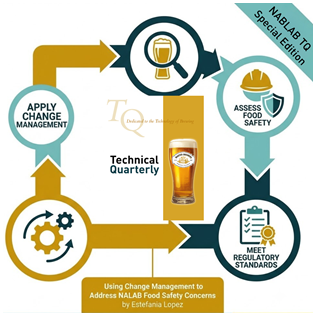
Navigating the transition into non-alcoholic brewing requires more than traditional product development. KTL’s recent article in the Master Brewer Association of the Americas (MBAA) Technical Quarterly outlines how breweries can leverage structured change management to address regulatory requirements and food safety risks when adding non-alcoholic and low-alcoholic beverage (NALAB) products. This article breaks down the essential regulatory standards, critical food safety risks, and change management strategies needed to successfully bring NALAB products to market securely. Read KTL’s MBAA Technical Quarterly article.
2026 Master Brewers Conference Poster Presentation: Highlighting NALAB Food Safety Concerns
KTL is also co-presenting a poster session with New Belgium Brewing Company on Food Safety and Regulatory Implications of Producing Nonalcoholic and Low-Alcohol Beer (NALAB) at the 2026 Master Brewers Conference in Virginia Beach, Virginia, October 22-24, 2026. In this poster presentation, the following experts from New Belgium Brewing Company and KTL explore the practical realities of integrating NALAB production into an existing brewing operation.
Maddy Frierson, Quality Scientist | mfrierson@newbelgium.com
New Belgium Brewing Company
Maddy is a food safety professional with three years of experience spanning academic research and industry application, including work in the microbiological safety of non-alcoholic beer and food safety program management in brewing operations. Her graduate research focused on evaluating the impact of pasteurization on pathogens in non-alcoholic beer and the impact of spoilage organisms on pathogen survival and growth in non-alcoholic beer products. At New Belgium Brewing Company’s Daleville, Virginia facility, Maddy works as a member of the food safety team, where she maintains and implements the site’s food safety management system to ensure compliance with GFSI certification requirements. She has also supported change management efforts associated with the site’s non-alcoholic beer production program, helping facilitate the integration of food safety principles into new processes and products. Maddy is passionate about food safety and the implementation of effective food safety management systems that protect consumers and support operational excellence.
Samantha Humphrey, Associate | shumphrey@goktl.com
KTL
Sam is a food safety and quality assurance (FSQA) professional with ten years of experience supporting the food and beverage industry. She has specialized expertise in food safety regulatory interpretation and compliance, particularly related to Good Manufacturing Practices (GMPs), Good Brewing Practices (GBPs), and Good Agricultural Practices (GAPs); GFSI certification; supply chain management; environmental monitoring and sanitation; and food microbiology. In the past few years, Sam has worked alongside several brewers, including New Belgium Brewing Company, to help build and implement GFSI-compliant food safety management systems that lead to certification. She is passionate about supporting the industry and providing best practice guidance as it pertains to mitigating food (beer) safety risk. Sam is a Certified ATD Master Trainer, Certified Professional – Food Safety (CP-FS), Preventive Controls Qualified Individual (PCQI) Lead Instructor, and Produce Safety Rule Lead Trainer, and is Juice and Seafood HACCP certified.

Comments: No Comments
KTL Joins WI Green Tier Panel on ISO 14001:2026
KTL is joining Wisconsin Department of Natural Resources (WDNR) Green Tier Program for a webinar on the recent changes to ISO 14001 and its implications for your environmental management system (EMS) on Tuesday, August 25 from 12:00-1:00 PM. Click here to register!
This webinar will focus on updates to the ISO 14001 standard, including:
- How to maintain conformance through your EMS.
- Expanded review of environmental conditions that impact or are impacted by your organization.
- Greater emphasis on lifecycle perspective when identifying aspects.
- New clause on managing change.
- Broader role for leadership.
- Updates to managing third-party provided processes and services.
- Alignment with Green Tier Functionally Equivalent EMS elements.
Guest speakers will include Green Tier auditors and DNR staff, who will share how the updates align with Green Tier’s Functionally Equivalent EMS and ‘superior environmental performance’ outcomes defined in law. Expert panelists include:
- April Greene, CSP, CHMM, KTL
- Douglas B. Johnson, Ph.D., KeenWorks LLC
- Kevin Lehner, Environmental Compliance Systems, Inc
- John Senter, The SenterStone Companies
- Jenni Birkholz, Green Tier Project Coordinator, WI DNR
- Weston Wegener, Green Tier Project Coordinator, WI DNR

Comments: No Comments
KTL Talks Safety Culture at the VPPPA 2026 Safety+ Symposium
KTL will be a featured presenter at VPPPA’s 2026 Safety+ Symposium in Nashville, Tennessee, August 30-September 2, 2026. The Safety+ Symposium is a premiere EHS&S event that provides the tools and resources to bring safety and health programs beyond compliance to excellence. It offers attendees the unique opportunity to see safety from all angles and better understand its role in the modern workplace. Designed with continuous improvement at its core, VPPPA’s Safety+ Symposium enables workers from all industries, at all levels, to better themselves as well as their workplace.
KTL will be presenting a breakout session on September 1 at 7:00 a.m. entitled Framework for Creating a Best-in-Class Safety Culture. Improving safety culture is one of the most urgent challenges facing organizations today. High-profile incidents in industries from energy to manufacturing demonstrate that compliance alone is not enough—organizational culture determines whether safety systems thrive or fail. Creating an effective Safety Culture Action Plan requires considering existing culture and honestly assessing which changes are reasonable to implement first. This session provides a tested framework, based on research and field experience, that enables professionals to recognize the building blocks of a world-class safety culture. KTL will discuss real-world practices, leadership behaviors, and organizational strategies that can elevate safety culture from good to truly best-in-class.
We look forward to connecting with you in Nashville!

KTL to Co-Present on Hazardous Materials Management at CUHMMC
KTL will be attending at the 2026 College & University Hazardous Materials Management Conference (CUHMMC) at the University of Minnesota – Twin Cities August 9-12, 2026. CUHMMC is the premier higher education hazmat conference, bringing together the EHS leaders from across higher education to discuss the challenges faced in an academic environment and solutions and best practices that have been implemented at peer institutions.
KTL will be co-presenting with Southeast Missouri State University (SEMO) on Using Microsoft SharePoint and the Power Platform for Hazardous Materials Management. This presentation will discuss how educational facilities can use Microsoft SharePoint and the Power Platform to develop hazardous materials data management tools. We will provide an overview of how the Microsoft platform can be used to address university-specific needs and will demonstrate tools such as a chemical inventory app, waste determination register, waste pick-up workflow, and a training management system.
We look forward to connecting with you in Minneapolis!
Comments: No Comments
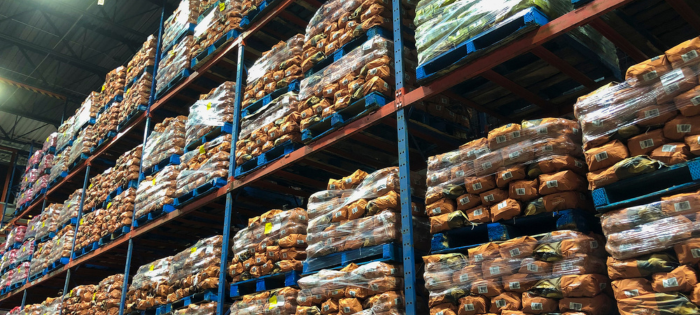
Managing Food Safety Risks in Warehouse and Distribution Centers
Recent recalls tied to contaminated warehouse conditions show how quickly an outside storage or distribution failure can become a brand, consumer safety, and regulatory problem for any company whose products pass through that facility. Food safety and quality are not limited to food manufacturers. When a third-party logistics (3PL) provider, outside warehouse, wholesaler, or distribution center (DC) stores regulated products under unsanitary conditions, otherwise compliant products can become adulterated after they leave the manufacturer’s control.
The reality is that once products enter an outside warehouse, the product manufacturer still owns the consequences of how their products are stored, protected, and traced, which is why managing 3PLs, warehouses, and DCs like any other supplier is so important.
Why It Matters
Many companies treat warehousing and distribution as downstream logistics functions rather than as critical control points in the food safety supply chain system. But there are clear ramifications from doing so. Storage, handling, pest control, sanitation, segregation, temperature control, inventory rotation, and traceability can materially affect product safety and quality. A product that was manufactured safely can still become contaminated, damaged, misidentified, or rendered unsuitable for sale during storage or distribution.
Outsourcing logistics does not remove responsibility. Brand owners, manufacturers, importers, distributors, and retailers may still face recall costs, customer claims, regulatory scrutiny, reputational harm, and business interruption if a third-party facility fails. Many consumers and customers will associate a third-party facility recall with the product brand, not the warehouse or DC where the failure occurred.
Key Risks Created by Outside Warehouse and Distribution Suppliers
Outside warehouses and DCs can introduce risk in several ways. The most prevalent is exposure to unsanitary conditions from pests, standing water, damaged packaging, poor housekeeping, inadequate waste management, or commingled storage. However, the risk profile is broader than sanitation alone and can include the following:
- Inadequate product traceability or lot-level visibility.
- Weak recall support or slow access to records.
- Inadequate temperature control and missing or incomplete temperature records.
- Improper segregation of allergens, chemicals, or incompatible products.
- Expired inventory, undocumented rework, or relabeling activity.
- Poor contractor oversight and insufficient facility security controls.
The highest risk facilities tend to be those that handle mixed-product categories, high-inventory turnover, small-lot distribution, damaged or returned goods, and products from many unrelated manufacturers. In these environments, one sanitation failure can affect hundreds (or even thousands) of SKUs and create a complex recall that requires coordination across multiple brands, retailers, regulators, and consumers.
Material and Measurable Impacts
Like any recall event, the consequences associated with a contaminated warehouse event may be significant for the warehouse, but also for the brand owner and product manufacturer. A recall can trigger product holds, expanded traceability exercises, customer notifications, disposal costs, refund obligations, transportation expenses, legal review, insurance claims, and lost sales. It can also expose gaps in supplier approval programs, recall plans, and crisis communication procedures. If the company cannot quickly determine which lots were stored where, when, and under what conditions, the scope and potential impacts of the recall may quickly expand.
Key Controls for Reducing Recall Risk
Companies using 3PLs and outside storage and distribution suppliers need to employ active oversight; a simple, signed service agreement is not enough. The strongest programs qualify storage and distribution providers before use, define expectations in writing, verify controls onsite, monitor performance continuously, test recall readiness, escalate early, document decisions, and requalify when risk changes—just as they would any other supplier.
The following actions can help to reduce recall risks and create a robust program to maintain warehouse compliance:
- Treat warehouses and 3PLs as critical suppliers. Include outside warehouses, DCs, fulfillment centers, and cross-dock operations in a formal Supplier Approval Program. Risk-rank them based on product type, storage conditions, regulatory category, geography, history, volume, and whether they handle mixed-product categories.
- Conduct structured due diligence and onsite audits. Before onboarding a 3PL, evaluate regulatory status, inspection history, certifications, insurance coverage, facility conditions, sanitation and pest management records, temperature-control capabilities, recall history, subcontractor use, and ability to support lot-level traceability. Audits should verify conditions directly; desk reviews are not enough.
- Require documented pest prevention and sanitation controls. Service agreements should require pest control maps, service records, trend reports, sanitation schedules, inspection logs, corrective actions, and evidence that findings are investigated and closed. Recurring pest activity, unexplained droppings, damaged doors, open dock gaps, or poor housekeeping should trigger escalation.
- Strengthen traceability and lot-level visibility. Manufacturers need to know which products, lots, and dates were stored at each facility. Ensure warehouse management systems support rapid retrieval of receiving, storage, movement, shipping, hold, and destruction records. If the affected lots cannot be isolated quickly, recall scope and cost will increase.
- Build recall obligations into supplier agreements. Agreements should define notification timelines, record access, product hold authority, communication responsibilities, destruction documentation, refund or recovery provisions, and cooperation with regulators. Companies should test these requirements through mock recalls involving the 3PL or warehouse supplier.
- Monitor performance continuously. Regular supplier oversight should include audit performance, corrective action closure time, pest activity trends, sanitation findings, temperature deviations, damaged goods rates, inventory accuracy, customer complaints, shipping errors, product hold events, regulatory findings, and mock recall completion time. These indicators should drive supplier risk ratings, audit frequency, and escalation requirements.
- Re-evaluate suppliers and maintain alternatives. Reassess 3PLs annually and when they add facilities, change ownership, expand product categories, increase volume, add subcontractors, receive regulatory findings, or experience contamination, temperature, traceability, or security incidents. Prequalifying backup suppliers can help support faster recovery if a logistics partner fails.
Key Takeaways
Warehouse and distribution controls are product safety controls. Outsourcing logistics does not outsource responsibility for product safety, traceability, or recall readiness. One sanitation failure at a multi-brand warehouse can create a complex, expensive, and highly visible recall. As such, brand owners need to manage 3PLs with the same discipline applied to manufacturers, ingredient suppliers, and other critical suppliers. The most effective programs are proactive, documented, risk-based, and supported by evidence to remove recall risk before it becomes a liability.

Environment / Food Safety / Information Management Solutions / Quality / Safety
Comments: No Comments
Tech Corner: Electronic Standards Register
Functionality: What does it do?
Certification standards help assure customers, suppliers, regulators, and stakeholders that an organization’s products, services, and management systems meet recognized best practices. These standards are not static. Requirements continue to evolve as certification bodies respond to new risks, regulatory expectations, sustainability priorities, technology changes, and global benchmarking requirements. These updates can quickly create gaps if requirements are tracked manually or inconsistently, especially for companies certified to more than one overlapping scheme.
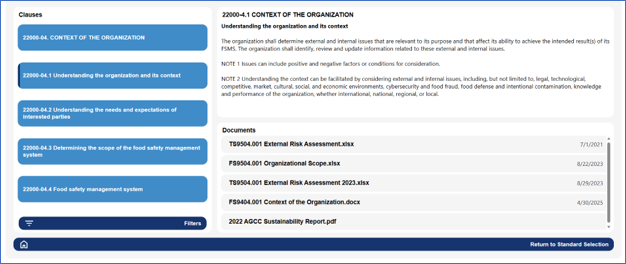
Recent and upcoming updates to SQF, FSSC 22000, ISO 14001, ISO 9001, and other ISO-based management system standards make it increasingly important for organizations to maintain a structured, current view of the requirements that apply to them. KTL’s electronic standards register organizes certification requirements into an online tool, allowing teams to track applicable clauses, map supporting documents, assign responsibilities, and monitor version changes across multiple standards.
Benefits: Why do you need it?
KTL’s electronic standards register is more than a document management tool. It provides the framework for monitoring change, assigning ownership, documenting implementation, and demonstrating that the organization has evaluated and responded to new or revised requirements in a timely, controlled manner. This is especially valuable during standards transitions to ensure the organization is complying with the most recent version.
An electronic standards register:
- Maps the organization’s documents to specific certification standard requirements.
- Identifies common requirements and allows documentation to be linked between standards, as needed.
- Maintains version control by tracking the current standard, upcoming revisions, transition deadlines, and changes that may affect procedures, records, training, and audit evidence.
- Supports proactive gap assessments when standards are revised, helping teams identify where policies, programs, forms, and responsibilities need to be updated before certification audits.
- Reduces the risk of missed updates when an organization manages multiple certification schemes, sites, departments, or document owners.
- Helps the internal audit team to complete and keep notes for the internal audit.
- Supports management review, internal audit planning, corrective action tracking, and communication across functions.
Technology Used
- Power Apps
- SharePoint

Comments: No Comments
Turning Warehouse Safety Inspection Risk into Operational Readiness
Warehouse and distribution center (DC) operations have fallen under increased scrutiny from the Occupational Safety and Health Administration (OSHA) due to their workplace hazards and associated injury and illness rates. In fact, the Bureau of Labor Statistics’ (BLS) history shows that injury and illness rates for these establishments are significantly higher than for other establishments. In response, OSHA established the National Emphasis Program (NEP) on Warehousing and DC Operations to implement comprehensive safety inspections focused on common hazards in warehouses and DCs.
Why the NEP Matters Now
Warehouses and DCs are complex, fast-moving environments where injury risk can quickly grow due to routine operating pressures. The NEP is OSHA’s response to these persistent risks. It directs enforcement attention toward the hazards that most often drive serious injuries. Core NEP focus areas include:
- Powered industrial vehicle operations (e.g., forklift traffic, pedestrian exposure, charging areas, and operator practices).
- Material handling and storage (e.g., rack condition, load stability, stacking, pallet condition, and congestion).
- Walking-working surfaces (e.g., slips, trips, falls, dock edges, floor conditions, and aisle obstructions).
- Means of egress and fire protection (e.g., blocked exits, emergency access, extinguishers, alarms, and storage near electrical or fire systems).
- Heat and ergonomic hazards.
The NEP is more than an enforcement directive; it is a practical planning tool that gives employers a preview of what inspectors are likely to evaluate. For warehouse leaders, this presents an opportunity to use OSHA’s inspection priorities to improve how safety is managed across people, equipment, workflows, and documentation. It further gives operators a roadmap to identify weaknesses before they become citations, reduce high-injury trends, strengthen compliance systems, and adequately prepare for inspections.
Start with the Hazards OSHA Is Prioritizing
Effective readiness starts by viewing the facility the way an OSHA compliance officer will. OSHA is not only looking for isolated hazards; it is looking for patterns that show whether safety controls are working consistently across the operation. That means evaluating physical conditions, work practices, employee understanding, and injury history together, not as separate compliance exercises. A clean checklist is not enough if the operation cannot demonstrate consistent operational control of workplace hazards.
Facility teams usually recognize obvious hazards, but the real risk is often in small hazards that become routine (e.g., recurring aisle obstructions, routine pedestrian-forklift conflicts, repeated rack damage, high-turnover training gaps, or workarounds that become accepted practice). These patterns are exactly the red flags that garner increased OSHA attention during an inspection.
The Difference Between Prepared and Inspection-Ready
Many operations feel prepared for an OSHA inspection because they have programs, records, and training in place. Inspection readiness requires more. The difference comes down to consistency vs. intention, documentation vs. verification, and awareness vs. execution. Warehouses that perform well during inspections typically know their risks, validate their systems regularly, train employees beyond minimum requirements, and treat safety as an operational priority.
A structured, OSHA-style readiness review that focuses on the following can help leaders see the operation through an inspection lens before OSHA does.
Confirm training is working in practice. Employees should receive regular training in forklift operations, hazard communication, lockout/tagout (LOTO) procedures, and emergency response actions. But training completion alone does not prove readiness. OSHA evaluates whether employees understand procedures and apply them consistently under real operating conditions. If employees across shifts/departments give uncertain or conflicting answers, inspectors may question whether procedures are understood, implemented, and reinforced.
Look closely at equipment, storage, and maintenance. Visible physical hazards can quickly shape the direction of an OSHA walkthrough. Damaged racks, poor housekeeping, blocked access, undocumented forklift inspections, and inconsistent preventive maintenance can signal broader management weaknesses. Equipment deficiencies are often among the fastest ways for an inspection to escalate. The concern is whether the facility has a reliable system for identifying, correcting, and preventing repeat conditions.
Make documentation available and inspection ready. Documentation is more than a recordkeeping requirement; it is evidence of how the safety system functions. Documentation includes not just following OSHA requirements but also what is dictated in internal policies and procedures. Often documents exist but are incomplete, inconsistent, outdated, or disconnected from what is happening on the floor. Conduct regular documentation audits and pressure-test critical records before an inspection to ensure OSHA 300/300A/301 logs, safety training records, equipment inspection logs, written safety programs (e.g., LOTO, PPE, Emergency Action Plan), and safety data sheets (SDS) not only exist, but that controls are implemented, verified, and corrected when they fail.
Build readiness into daily operations. Strong OSHA readiness depends on operational discipline. Supervisors must reinforce expectations, employees must know how to report hazards, and leadership must treat safety performance as part of how work gets done. Once again, inconsistency is a warning sign. How the organization responds to corrective actions (i.e., priority, urgency, timeliness) also shows OSHA how seriously the company takes safety. If practices vary significantly by shift, supervisor, department, or workload—or if corrective actions aren’t appropriately prioritized and addressed—OSHA may view that as evidence that the safety system is not being managed effectively.
Strengthening OSHA Readiness
OSHA readiness is not achieved through a binder, checklist, or one-time walkthrough. It is built through disciplined execution, clear accountability, and consistent oversight. Comparing OSHA’s inspection priorities against actual operating conditions can help move warehouses and DCs from general compliance review to targeted risk reduction:
- Compare OSHA 300, 300A, and 301 records against NEP hazard categories to identify and correct injury patterns.
- Walk the facility by process flow (i.e., receiving, put-away, picking, packing, shipping, returns, maintenance, and charging areas) rather than by department alone.
- Verify that high-frequency tasks have effective controls for struck-by, caught-in-between, fall, ergonomic, and heat exposures.
- Interview employees and supervisors using inspection-style questions to confirm procedures are understood and followed consistently.
- Review corrective actions to identify root causes and prevent recurrence. Repeat hazards suggest weak accountability, not isolated noncompliance.
- Document what was reviewed, what was found, the root cause, who owns each corrective action, and how completion will be verified.
- Ensure leadership commitment is communicated throughout the organization.
Getting Started
If you are unsure how your warehouse or DC would perform during an OSHA inspection, a structured readiness review can help benchmark your current state, identify priority gaps, provide practical next steps, and create clarity before the stakes are higher. KTL partners with warehouses and DCs to conduct OSHA-style mock assessments and readiness evaluations that focus on:
- Identifying hidden risk patterns, not just visible hazards.
- Aligning safety practices with day-to-day operations and NEP inspection priorities.
- Improving and validating documentation systems and audit readiness.
- Evaluating training effectiveness.
- Identifying operational patterns that contribute to high injury rates.
- Strengthening accountability at the supervisor level.
- Enhancing compliance systems, reducing operational risk, and improving overall safety performance.
- Promoting a culture of safety across all levels of the organization.

Visit KTL at the 156th Congress of Correction
KTL will be exhibiting at the American Correctional Association’s 156th Congress of Correction in Pittsburgh, PA, July 30 – August 2, 2026. The Congress features a wide array of workshops and sessions focused on cutting-edge topics for correctional facilities. The educational workshops feature the best in the business, passing on critical knowledge and engaging in important discussions, while the expansive exhibit allows attendees to interact with hundreds of companies serving the correctional industry.
Be sure to stop by and visit KTL at Booth #1106. We’ll be sharing more about our EHS, food safety, and Microsoft 365 information management solutions. We look forward to connecting with you in Pittsburgh!

Increasing Federal Attention on Microplastics
Microplastics have been found in every ecosystem on the planet—in food, beverages, and human and animal tissue. While scientists still do not fully understand the impacts of microplastics on human health and aquatic life, federal attention to microplastics is increasing.
EPA and HHS: A Coordinated National Strategy
In April 2026, the U.S. Environmental Protection Agency (EPA) and Department of Health and Human Services (HHS) made a joint announcement describing microplastics contamination as “one of the most urgent and growing public health challenges facing Americans.” The release announced major actions to study microplastics in drinking water and the human body, as described below. Together, these developments point to closer scrutiny, better testing methods, and possible future regulatory action affecting food companies, manufacturers, and other industrial sectors.
Historic Recognition as a Priority Contaminant. For the first time, EPA has included microplastics as a priority contaminant group in its Draft Sixth Contaminant Candidate List (CCL 6). The CCL is published every five years and contains a list of substances designated by EPA as potentially warranting future regulation under the Safe Drinking Water Act (SDWA). CCL 6 identifies contaminants not yet regulated but known or anticipated to occur in public water systems. The draft list includes four chemical groups, including microplastics, per- and polyfluoroalkyl substances (PFAS), pharmaceuticals, and disinfection byproducts; nine microbes; and 75 chemicals.
The inclusion of microplastics in CCL 6 is historic. It signals that microplastics are no longer viewed solely as an environmental pollutant but as a potential human health threat requiring scientific scrutiny, regulatory planning, and industry accountability.
Systematic Targeting Of MicroPlastics (STOMP) Program. As part of the coordinated national strategy to address microplastics, HHS’s Advanced Research Projects Agency for Health (ARPA-H) has launched the STOMP program. This $144 million national initiative is intended to measure, map, and remove microplastics and nanoplastics from the human body.
The STOMP program is the first federal effort aimed not just at environmental monitoring but also at understanding microplastics inside human tissues. Researchers have already detected microplastics in lungs, arterial plaques, and even the brain, yet measurement methods remain inconsistent, making it difficult to assess risk or design interventions. STOMP aims to change that by:
- Identifying which microplastics are most harmful and how they move through the body.
- Developing gold-standard detection technologies for microplastics in water and human tissue.
- Creating safe, scalable removal methods, especially for vulnerable populations such as children, pregnant women, and high-exposure workers.
Focus on Food Safety
The Food and Drug Administration (FDA) continues to work on improving how microplastics and nanoplastics are detected and assessed in food. FDA has included microplastics as a priority deliverable under its Human Foods Program chemical food safety focus area, indicating that planned actions include research to improve the agency’s ability to accurately detect, quantify, and characterize microplastics in human food.
In light of this, food and beverage manufacturing, processing, and packaging companies should anticipate increased scrutiny of microplastic contamination across the food chain. Key implications include the following:
- Water used in food processing may face new regulatory limits for microplastics, requiring upgraded filtration or monitoring systems.
- Packaging materials, especially plastics that degrade into micro- and nanoplastics, may be reevaluated for shedding risk.
- Seafood, salt, bottled beverages, and processed foods that already known to contain microplastics may become targets for new testing requirements.
- Hazard analysis frameworks (e.g., Hazard Analysis and Critical Control Points (HACCP)) may need to incorporate microplastics as an emerging contaminant category.
Implications for Industry
Manufacturers in every industry, but particularly those using plastics, solvents, or high-shear processes, should prepare for the following:
- New Monitoring and Reporting Requirements. EPA’s CCL 6 designation signals that microplastics may become regulated contaminants. Industries that discharge wastewater or rely on plastic-intensive processes may face:
- Mandatory microplastic monitoring.
- Stricter discharge permits.
- Requirements for new filtration or capture technologies.
- Supply Chain and Material Redesign. As STOMP identifies the most harmful microplastics, regulators may target specific polymers or additives. Companies may need to:
- Shift to alternative materials.
- Redesign products to minimize shedding.
- Improve durability to reduce particle generation.
- Increased Need for Environmental Services. To meet potential regulatory changes, many companies may need to implement advanced environment solutions, including:
- Microplastic sampling and analysis.
- Remediation technologies.
- Regulatory compliance strategies.
- Worker Safety Considerations. Microplastics have been detected in human lungs and arterial plaques. Industrial environments with airborne plastic dust may face:
- Updated Occupational Safety and Health Administration (OSHA) guidance.
- New personal protective equipment (PPE) or ventilation requirements.
- Exposure monitoring programs.
Proactively Adapting
Microplastics are likely to remain a growing focus for federal research and possible future regulation. As EPA, HHS, and FDA continue developing the science, companies should expect stronger scrutiny, better detection methods, and increasing pressure to understand where microplastics may enter operations, products, and supply chains. Organizations that proactively adapt by assessing potential exposure points, improving filtration, redesigning materials, and monitoring microplastic exposure will be better positioned if (or when) monitoring expectations, customer demands, or regulatory requirements expand.