
Environment / Food Safety / Information Management Solutions / Quality / Safety
Comments: No Comments
Tech Corner: Electronic Standards Register
Functionality: What does it do?
Certification standards help assure customers, suppliers, regulators, and stakeholders that an organization’s products, services, and management systems meet recognized best practices. These standards are not static. Requirements continue to evolve as certification bodies respond to new risks, regulatory expectations, sustainability priorities, technology changes, and global benchmarking requirements. These updates can quickly create gaps if requirements are tracked manually or inconsistently, especially for companies certified to more than one overlapping scheme.
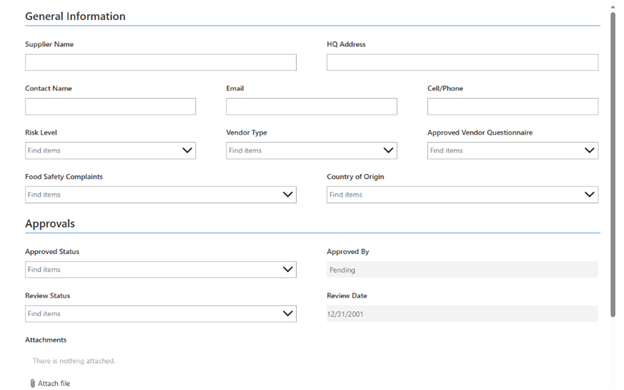
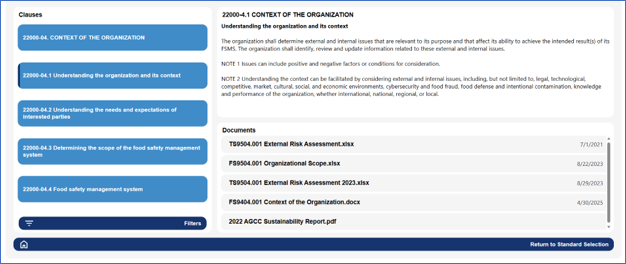
Recent and upcoming updates to SQF, FSSC 22000, ISO 14001, ISO 9001, and other ISO-based management system standards make it increasingly important for organizations to maintain a structured, current view of the requirements that apply to them. KTL’s electronic standards register organizes certification requirements into an online tool, allowing teams to track applicable clauses, map supporting documents, assign responsibilities, and monitor version changes across multiple standards.
Benefits: Why do you need it?
KTL’s electronic standards register is more than a document management tool. It provides the framework for monitoring change, assigning ownership, documenting implementation, and demonstrating that the organization has evaluated and responded to new or revised requirements in a timely, controlled manner. This is especially valuable during standards transitions to ensure the organization is complying with the most recent version.
An electronic standards register:
- Maps the organization’s documents to specific certification standard requirements.
- Identifies common requirements and allows documentation to be linked between standards, as needed.
- Maintains version control by tracking the current standard, upcoming revisions, transition deadlines, and changes that may affect procedures, records, training, and audit evidence.
- Supports proactive gap assessments when standards are revised, helping teams identify where policies, programs, forms, and responsibilities need to be updated before certification audits.
- Reduces the risk of missed updates when an organization manages multiple certification schemes, sites, departments, or document owners.
- Helps the internal audit team to complete and keep notes for the internal audit.
- Supports management review, internal audit planning, corrective action tracking, and communication across functions.
Technology Used
- Power Apps
- SharePoint

Comments: No Comments
Turning Warehouse Safety Inspection Risk into Operational Readiness
Warehouse and distribution center (DC) operations have fallen under increased scrutiny from the Occupational Safety and Health Administration (OSHA) due to their workplace hazards and associated injury and illness rates. In fact, the Bureau of Labor Statistics’ (BLS) history shows that injury and illness rates for these establishments are significantly higher than for other establishments. In response, OSHA established the National Emphasis Program (NEP) on Warehousing and DC Operations to implement comprehensive safety inspections focused on common hazards in warehouses and DCs.
Why the NEP Matters Now
Warehouses and DCs are complex, fast-moving environments where injury risk can quickly grow due to routine operating pressures. The NEP is OSHA’s response to these persistent risks. It directs enforcement attention toward the hazards that most often drive serious injuries. Core NEP focus areas include:
- Powered industrial vehicle operations (e.g., forklift traffic, pedestrian exposure, charging areas, and operator practices).
- Material handling and storage (e.g., rack condition, load stability, stacking, pallet condition, and congestion).
- Walking-working surfaces (e.g., slips, trips, falls, dock edges, floor conditions, and aisle obstructions).
- Means of egress and fire protection (e.g., blocked exits, emergency access, extinguishers, alarms, and storage near electrical or fire systems).
- Heat and ergonomic hazards.
The NEP is more than an enforcement directive; it is a practical planning tool that gives employers a preview of what inspectors are likely to evaluate. For warehouse leaders, this presents an opportunity to use OSHA’s inspection priorities to improve how safety is managed across people, equipment, workflows, and documentation. It further gives operators a roadmap to identify weaknesses before they become citations, reduce high-injury trends, strengthen compliance systems, and adequately prepare for inspections.
Start with the Hazards OSHA Is Prioritizing
Effective readiness starts by viewing the facility the way an OSHA compliance officer will. OSHA is not only looking for isolated hazards; it is looking for patterns that show whether safety controls are working consistently across the operation. That means evaluating physical conditions, work practices, employee understanding, and injury history together, not as separate compliance exercises. A clean checklist is not enough if the operation cannot demonstrate consistent operational control of workplace hazards.
Facility teams usually recognize obvious hazards, but the real risk is often in small hazards that become routine (e.g., recurring aisle obstructions, routine pedestrian-forklift conflicts, repeated rack damage, high-turnover training gaps, or workarounds that become accepted practice). These patterns are exactly the red flags that garner increased OSHA attention during an inspection.
The Difference Between Prepared and Inspection-Ready
Many operations feel prepared for an OSHA inspection because they have programs, records, and training in place. Inspection readiness requires more. The difference comes down to consistency vs. intention, documentation vs. verification, and awareness vs. execution. Warehouses that perform well during inspections typically know their risks, validate their systems regularly, train employees beyond minimum requirements, and treat safety as an operational priority.
A structured, OSHA-style readiness review that focuses on the following can help leaders see the operation through an inspection lens before OSHA does.
Confirm training is working in practice. Employees should receive regular training in forklift operations, hazard communication, lockout/tagout (LOTO) procedures, and emergency response actions. But training completion alone does not prove readiness. OSHA evaluates whether employees understand procedures and apply them consistently under real operating conditions. If employees across shifts/departments give uncertain or conflicting answers, inspectors may question whether procedures are understood, implemented, and reinforced.
Look closely at equipment, storage, and maintenance. Visible physical hazards can quickly shape the direction of an OSHA walkthrough. Damaged racks, poor housekeeping, blocked access, undocumented forklift inspections, and inconsistent preventive maintenance can signal broader management weaknesses. Equipment deficiencies are often among the fastest ways for an inspection to escalate. The concern is whether the facility has a reliable system for identifying, correcting, and preventing repeat conditions.
Make documentation available and inspection ready. Documentation is more than a recordkeeping requirement; it is evidence of how the safety system functions. Documentation includes not just following OSHA requirements but also what is dictated in internal policies and procedures. Often documents exist but are incomplete, inconsistent, outdated, or disconnected from what is happening on the floor. Conduct regular documentation audits and pressure-test critical records before an inspection to ensure OSHA 300/300A/301 logs, safety training records, equipment inspection logs, written safety programs (e.g., LOTO, PPE, Emergency Action Plan), and safety data sheets (SDS) not only exist, but that controls are implemented, verified, and corrected when they fail.
Build readiness into daily operations. Strong OSHA readiness depends on operational discipline. Supervisors must reinforce expectations, employees must know how to report hazards, and leadership must treat safety performance as part of how work gets done. Once again, inconsistency is a warning sign. How the organization responds to corrective actions (i.e., priority, urgency, timeliness) also shows OSHA how seriously the company takes safety. If practices vary significantly by shift, supervisor, department, or workload—or if corrective actions aren’t appropriately prioritized and addressed—OSHA may view that as evidence that the safety system is not being managed effectively.
Strengthening OSHA Readiness
OSHA readiness is not achieved through a binder, checklist, or one-time walkthrough. It is built through disciplined execution, clear accountability, and consistent oversight. Comparing OSHA’s inspection priorities against actual operating conditions can help move warehouses and DCs from general compliance review to targeted risk reduction:
- Compare OSHA 300, 300A, and 301 records against NEP hazard categories to identify and correct injury patterns.
- Walk the facility by process flow (i.e., receiving, put-away, picking, packing, shipping, returns, maintenance, and charging areas) rather than by department alone.
- Verify that high-frequency tasks have effective controls for struck-by, caught-in-between, fall, ergonomic, and heat exposures.
- Interview employees and supervisors using inspection-style questions to confirm procedures are understood and followed consistently.
- Review corrective actions to identify root causes and prevent recurrence. Repeat hazards suggest weak accountability, not isolated noncompliance.
- Document what was reviewed, what was found, the root cause, who owns each corrective action, and how completion will be verified.
- Ensure leadership commitment is communicated throughout the organization.
Getting Started
If you are unsure how your warehouse or DC would perform during an OSHA inspection, a structured readiness review can help benchmark your current state, identify priority gaps, provide practical next steps, and create clarity before the stakes are higher. KTL partners with warehouses and DCs to conduct OSHA-style mock assessments and readiness evaluations that focus on:
- Identifying hidden risk patterns, not just visible hazards.
- Aligning safety practices with day-to-day operations and NEP inspection priorities.
- Improving and validating documentation systems and audit readiness.
- Evaluating training effectiveness.
- Identifying operational patterns that contribute to high injury rates.
- Strengthening accountability at the supervisor level.
- Enhancing compliance systems, reducing operational risk, and improving overall safety performance.
- Promoting a culture of safety across all levels of the organization.

Visit KTL at the 156th Congress of Correction
KTL will be exhibiting at the American Correctional Association’s 156th Congress of Correction in Pittsburgh, PA, July 30 – August 2, 2026. The Congress features a wide array of workshops and sessions focused on cutting-edge topics for correctional facilities. The educational workshops feature the best in the business, passing on critical knowledge and engaging in important discussions, while the expansive exhibit allows attendees to interact with hundreds of companies serving the correctional industry.
Be sure to stop by and visit KTL at Booth #1106. We’ll be sharing more about our EHS, food safety, and Microsoft 365 information management solutions. We look forward to connecting with you in Pittsburgh!

Increasing Federal Attention on Microplastics
Microplastics have been found in every ecosystem on the planet—in food, beverages, and human and animal tissue. While scientists still do not fully understand the impacts of microplastics on human health and aquatic life, federal attention to microplastics is increasing.
EPA and HHS: A Coordinated National Strategy
In April 2026, the U.S. Environmental Protection Agency (EPA) and Department of Health and Human Services (HHS) made a joint announcement describing microplastics contamination as “one of the most urgent and growing public health challenges facing Americans.” The release announced major actions to study microplastics in drinking water and the human body, as described below. Together, these developments point to closer scrutiny, better testing methods, and possible future regulatory action affecting food companies, manufacturers, and other industrial sectors.
Historic Recognition as a Priority Contaminant. For the first time, EPA has included microplastics as a priority contaminant group in its Draft Sixth Contaminant Candidate List (CCL 6). The CCL is published every five years and contains a list of substances designated by EPA as potentially warranting future regulation under the Safe Drinking Water Act (SDWA). CCL 6 identifies contaminants not yet regulated but known or anticipated to occur in public water systems. The draft list includes four chemical groups, including microplastics, per- and polyfluoroalkyl substances (PFAS), pharmaceuticals, and disinfection byproducts; nine microbes; and 75 chemicals.
The inclusion of microplastics in CCL 6 is historic. It signals that microplastics are no longer viewed solely as an environmental pollutant but as a potential human health threat requiring scientific scrutiny, regulatory planning, and industry accountability.
Systematic Targeting Of MicroPlastics (STOMP) Program. As part of the coordinated national strategy to address microplastics, HHS’s Advanced Research Projects Agency for Health (ARPA-H) has launched the STOMP program. This $144 million national initiative is intended to measure, map, and remove microplastics and nanoplastics from the human body.
The STOMP program is the first federal effort aimed not just at environmental monitoring but also at understanding microplastics inside human tissues. Researchers have already detected microplastics in lungs, arterial plaques, and even the brain, yet measurement methods remain inconsistent, making it difficult to assess risk or design interventions. STOMP aims to change that by:
- Identifying which microplastics are most harmful and how they move through the body.
- Developing gold-standard detection technologies for microplastics in water and human tissue.
- Creating safe, scalable removal methods, especially for vulnerable populations such as children, pregnant women, and high-exposure workers.
Focus on Food Safety
The Food and Drug Administration (FDA) continues to work on improving how microplastics and nanoplastics are detected and assessed in food. FDA has included microplastics as a priority deliverable under its Human Foods Program chemical food safety focus area, indicating that planned actions include research to improve the agency’s ability to accurately detect, quantify, and characterize microplastics in human food.
In light of this, food and beverage manufacturing, processing, and packaging companies should anticipate increased scrutiny of microplastic contamination across the food chain. Key implications include the following:
- Water used in food processing may face new regulatory limits for microplastics, requiring upgraded filtration or monitoring systems.
- Packaging materials, especially plastics that degrade into micro- and nanoplastics, may be reevaluated for shedding risk.
- Seafood, salt, bottled beverages, and processed foods that already known to contain microplastics may become targets for new testing requirements.
- Hazard analysis frameworks (e.g., Hazard Analysis and Critical Control Points (HACCP)) may need to incorporate microplastics as an emerging contaminant category.
Implications for Industry
Manufacturers in every industry, but particularly those using plastics, solvents, or high-shear processes, should prepare for the following:
- New Monitoring and Reporting Requirements. EPA’s CCL 6 designation signals that microplastics may become regulated contaminants. Industries that discharge wastewater or rely on plastic-intensive processes may face:
- Mandatory microplastic monitoring.
- Stricter discharge permits.
- Requirements for new filtration or capture technologies.
- Supply Chain and Material Redesign. As STOMP identifies the most harmful microplastics, regulators may target specific polymers or additives. Companies may need to:
- Shift to alternative materials.
- Redesign products to minimize shedding.
- Improve durability to reduce particle generation.
- Increased Need for Environmental Services. To meet potential regulatory changes, many companies may need to implement advanced environment solutions, including:
- Microplastic sampling and analysis.
- Remediation technologies.
- Regulatory compliance strategies.
- Worker Safety Considerations. Microplastics have been detected in human lungs and arterial plaques. Industrial environments with airborne plastic dust may face:
- Updated Occupational Safety and Health Administration (OSHA) guidance.
- New personal protective equipment (PPE) or ventilation requirements.
- Exposure monitoring programs.
Proactively Adapting
Microplastics are likely to remain a growing focus for federal research and possible future regulation. As EPA, HHS, and FDA continue developing the science, companies should expect stronger scrutiny, better detection methods, and increasing pressure to understand where microplastics may enter operations, products, and supply chains. Organizations that proactively adapt by assessing potential exposure points, improving filtration, redesigning materials, and monitoring microplastic exposure will be better positioned if (or when) monitoring expectations, customer demands, or regulatory requirements expand.
Comments: No Comments
Celebrating 30 Years of National Safety Month
Every June, the National Safety Council (NSC) observes National Safety Month to bring additional attention to occupational health and safety (OHS) issues, reinforce the importance of having a strong safety culture, and encourage employers and individuals to be safety role models. This June marks 30 years of celebrating National Safety Month and keeping people safe—from the workplace to anyplace.
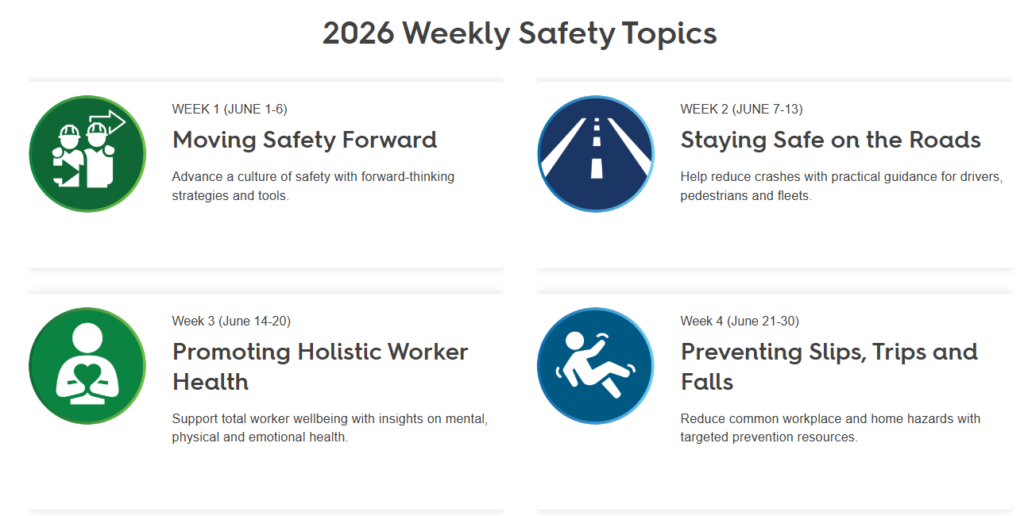
NSC has established four focus areas for 2026:
- Moving Safety Forward
- Staying Safe on the Roads
- Promoting Holistic Worker Health
- Preventing Slips, Trips, and Falls
KTL digs deeper into each focus area below:
Moving Safety Forward: OHS Document Management Systems
An OHS Document Management System provides a company-wide framework for central, secure storage and organization of safety-related documents and records to elevate workplace safety and move it forward in the organization. This includes policies, procedures, training records, inspection reports, and regulatory documentation to comply with Occupational Safety and Health Administration (OSHA) requirements.
Safety records often have strict retention and security requirements and must be accessible for an audit at any time. A structured OHS Document Management System can help ensure that these critical files are not only retained according to OSHA requirements, but also are standardized, easily searchable, and available to the right people when they need them. Read more…
Staying Safe on the Roads: Fleet Safety
A fleet is not limited to tractor-trailers or large delivery operations. If employees drive cars, vans, pickups, or other vehicles for work, the organization likely has fleet exposure and should manage it accordingly. Essentially, if vehicles are used in commerce, employers need to define fleet scope; evaluate applicable requirements; and treat driving as a safety, liability, and operational risk issue.
Fleet safety requires several core controls, including a written Fleet Safety Policy, driver screening and qualification, defensive driving training, and refresher training. Policies should address seat belt use; distracted driving; drug and alcohol prohibitions; and reporting of crashes, theft, and vehicle damage. If employees drive for work, fleet safety needs to be formalized to protect employees and the organization. Read more…
Promoting Holistic Worker Health: Psychological Safety
Workplace safety and health goes beyond the physical. A strong safety culture focuses on the whole person, and that includes ensuring psychological safety. Psychological safety is the shared belief that it is okay to take risks, express concerns and ideas, ask questions, speak up, and admit mistakes in the workplace without fear of being punished or humiliated.
Psychological safety is a critical concept for building effective teams and, many would argue, a critical concept for encouraging workplace innovation and success. According to the Center for Creative Leadership research, teams with high degrees of psychological safety report higher levels of performance and lower levels of interpersonal conflict. This is because employees who feel their workplace is psychologically safe are more willing to engage in behaviors that contribute to greater organizational innovation. Read more…
Preventing Slips, Trips, and Falls: Walking-Working Surfaces
Slips, trips, and falls routinely hit the top of OSHA’s Top 10 Violations. Walking-working surfaces include any horizontal, vertical, or inclined surface employees use to walk, work, or access a work area. That includes floors, stairs, ladders, platforms, scaffolds, ramps, and roofs. It’s important to remember that slip, trip, and fall risk is not limited to elevated work. Same-level hazards such as clutter, spills, cracks, holes, unmarked surface changes, and poor housekeeping can be just as significant and need to be managed as routine safety control issues.
OSHA 29 CFR 1910 Subpart D is the primary general industry standard for walking-working surfaces. To meet these standards and keep employees safe, there are several core controls employers should implement, including keeping surfaces clean and orderly, maintaining dry conditions where feasible, correcting defects promptly, ensuring safe access and egress, and confirming surfaces can support intended loads. In short, employers should treat walking-working surface hazards as an inspection, maintenance, and training issue, not just a housekeeping issue. Read more…
Additional Resources
As part of National Safety Month, NSC is offering free resources in these four areas (and more!) to help prevent injuries and safe lives. Check out these resources and take the NSC SafeAtWork Pledge to commit to:
- Actively helping your employer improve safety programs.
- Reporting hazards promptly and suggesting solutions.
- Being a good safety role model for coworkers, friends, and family, even off the job.

Comments: No Comments
New ASSP Guidelines for Assessing and Managing Risks
In April 2026, the American Society of Safety Professionals (ASSP) published ANSI/ASSP Z310.1-2026, the first U.S.-based standard that provides guidelines for assessing and managing risk across an organization. It establishes principles, a framework, and a process to help organizations develop a structured approach to risk management that builds on concepts published in ISO 31000:2019, Risk Management Principles and Guidelines.
The new ANSI/ASSP standard is intended to provide more practical and simplified implementation-focused guidance, while remaining aligned with the global ISO standard.
Key Elements
ASSP’s new guidelines are designed for organizations of any size or sector to apply them across the organization’s lifecycle and to decision-making at all levels. Importantly, the guidelines expand beyond safety and compliance to inform organizational risk management. Specifically, the guidelines include the following key elements:
- Integrate risk management into the organization’s management systems and operations. Risk management should not be treated as a separate or occasional exercise. It should be fully integrated into an organization’s management system, governance, leadership, strategy, and daily operations to help improve decision-making and create business value
- Use a structured and consistent approach to risk management. The standard outlines a systematic process to identify, assess, address, monitor, and review risks consistently rather than informally or ad hoc.
- Customize the approach to the organization’s context. The risk management approach should be tailored to the organization’s size, sector, operating environment, objectives, and specific risk profile rather than applied as a one-size-fits-all model.
- Support decision-making at all levels. The standard supports and informs strategic, tactical, and operational decisions, not just safety or compliance functions.
- Engaging stakeholders and being inclusive. Effective risk management should involve relevant internal and external stakeholders to ensure risk information is complete, practical, and actionable.
- Using timely, clear, and available information. Risk decisions should be based on current and understandable information; however, the guidance recognizes that decisions often must be made under uncertainty when that information is not available.
- Accounting for human and cultural factors. Organizational culture, behavior, and human factors affect how risks emerge, are perceived, and are controlled.
- Remaining dynamic and evolving to continually improve. Organizations should anticipate change and monitor new or evolving risks to regularly improve their risk management practices over time.
Aligning with the Standard
ANSI/ASSP Z310.1-2026 is a voluntary guidance standard rather than a regulation. In practice, organizations typically demonstrate alignment by showing that risk management is documented, integrated into decision-making, applied consistently, and reviewed for effectiveness.
Aligning with the new guidelines by taking the following steps will help organizations move from fragmented or reactive risk practices to a more disciplined, organization-wide, decision-focused risk management system:
- Establish a formal risk management policy or framework tied to organizational objectives. Do we have a documented risk management policy, framework, or equivalent guidance approved by leadership?
- Define governance and accountability, including leadership oversight, roles, responsibilities, and escalation paths. Are roles, responsibilities, decision rights, and escalation paths for risk management clearly defined?
- Embed risk review into planning and decision-making such as strategy, projects, operations, procurement, and change management. Is risk management integrated into governance, leadership, strategy, and day-to-day operations rather than treated as a standalone exercise?
- Create a repeatable risk process for identifying, analyzing, evaluating, treating, monitoring, and communicating risks. Do we use a repeatable process to identify risks across strategic, operational, financial, safety, compliance, and other relevant areas?
- Document risk criteria and methods so risk ratings and treatment decisions are consistent. Do we apply defined criteria and methods to analyze likelihood, impact, velocity, uncertainty, or other relevant factors and evaluate priorities consistently? Have we tailored the risk management approach to our size, sector, objectives, regulatory environment, and risk profile?
- Engage relevant stakeholders when identifying and evaluating risks. Are relevant internal and external stakeholders engaged when identifying, assessing, and responding to risks?
- Use reliable data and review it regularly so decisions reflect current conditions. Is risk information used to support strategic, tactical, and operational decisions at all levels? Do risk decisions rely on timely, clear, and available information, and is that information reviewed regularly?
- Address culture and human factors in how risks are communicated, accepted, and controlled. Do we consider human behavior, organizational culture, incentives, competence, and communication when assessing and managing risks?
- Monitor performance and continually improve through periodic reviews, lessons learned, and updates to controls and processes. Do we monitor internal and external changes and emerging risks and update assessments when conditions change? Do we routinely monitor risk indicators, review control effectiveness, and reassess significant risks? Do we use lessons learned, audits, incidents, and reviews to improve the risk management framework and process over time?
KTL’s team includes experienced risk assessors, risk managers, and safety professionals, who regularly apply the concepts included in the new guidance to help organizations effectively understand and manage their safety and organizational risks. If you need assistance interpreting and applying the ASSP/ANZI Z310.1-2026 standard, please contact KTL.
***
Note: The complete ASSP/ANSI Z310.1-2026 standard can be purchased in the ASSP Store.
Environment / KTL News / Safety
Comments: No Comments
KTL to Present on EHS at REMS Summit 2026
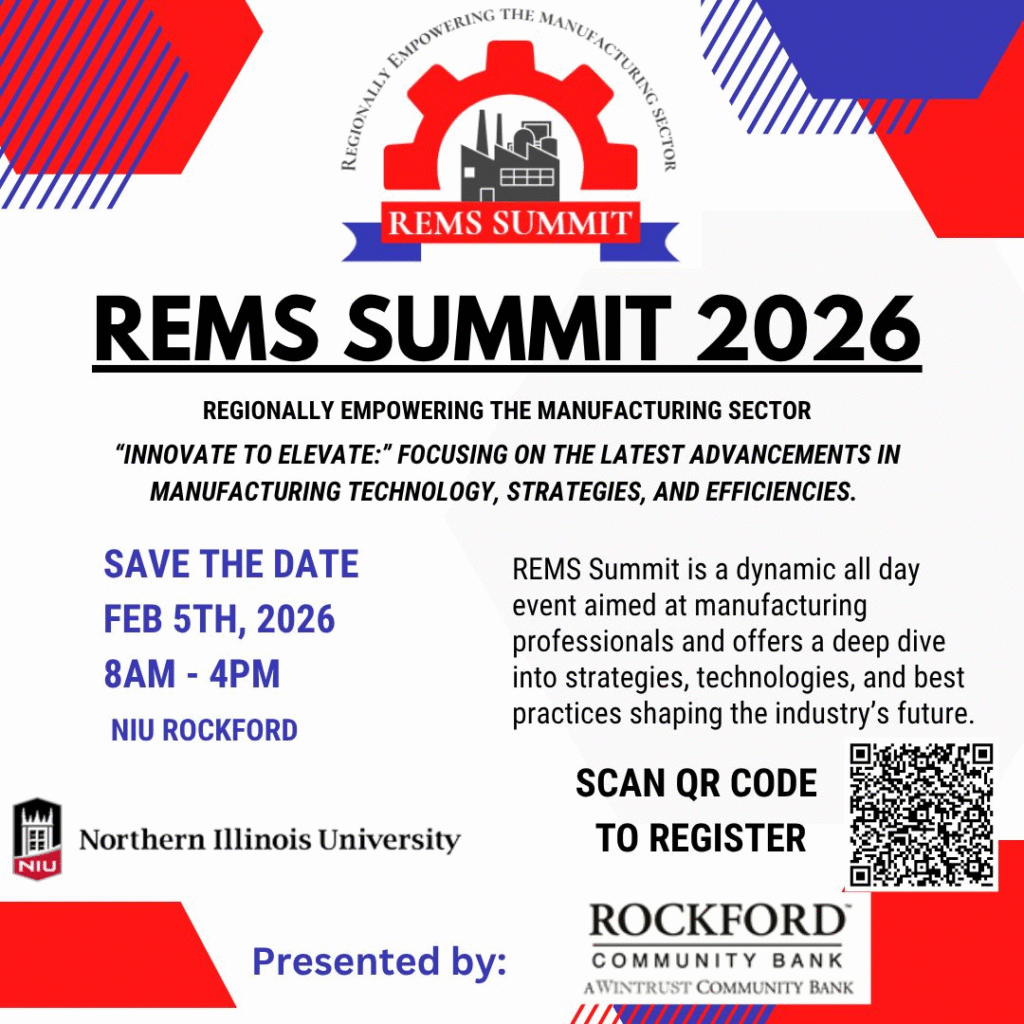
If you are in the Rockford area, you won’t want to miss KTL at the REMS Summit 2026, held at the NIU Rockford Campus on February 5, 2026. The REMS Summit offers Rockford-area leaders in manufacturing keynote sessions on legislative updates and strategic priorities, as well as interactive breakout sessions covering workforce development, automation/AI, supply chain strategy, HR modernization, Lean leadership, and environmental, health & safety compliance.
KTL’s April Greene, CSP, CHMM, will be presenting a breakout session on Environmental, Health & Safety: What You Need to Know. This session will:
- Provide an overview of applicable federal, state, and local occupational safety and environmental regulatory requirements.
- Explain what is required to comply with federal, state, and local environmental and occupational safety regulations (i.e., your obligations as an employer).
- Identify common compliance pitfalls and gaps in existing operations, processes, and practices.
- Outline best practices for developing practical systems to manage risk and stay compliant.

Tech Corner: Chemical Inventory Tool
Functionality: What does it do?
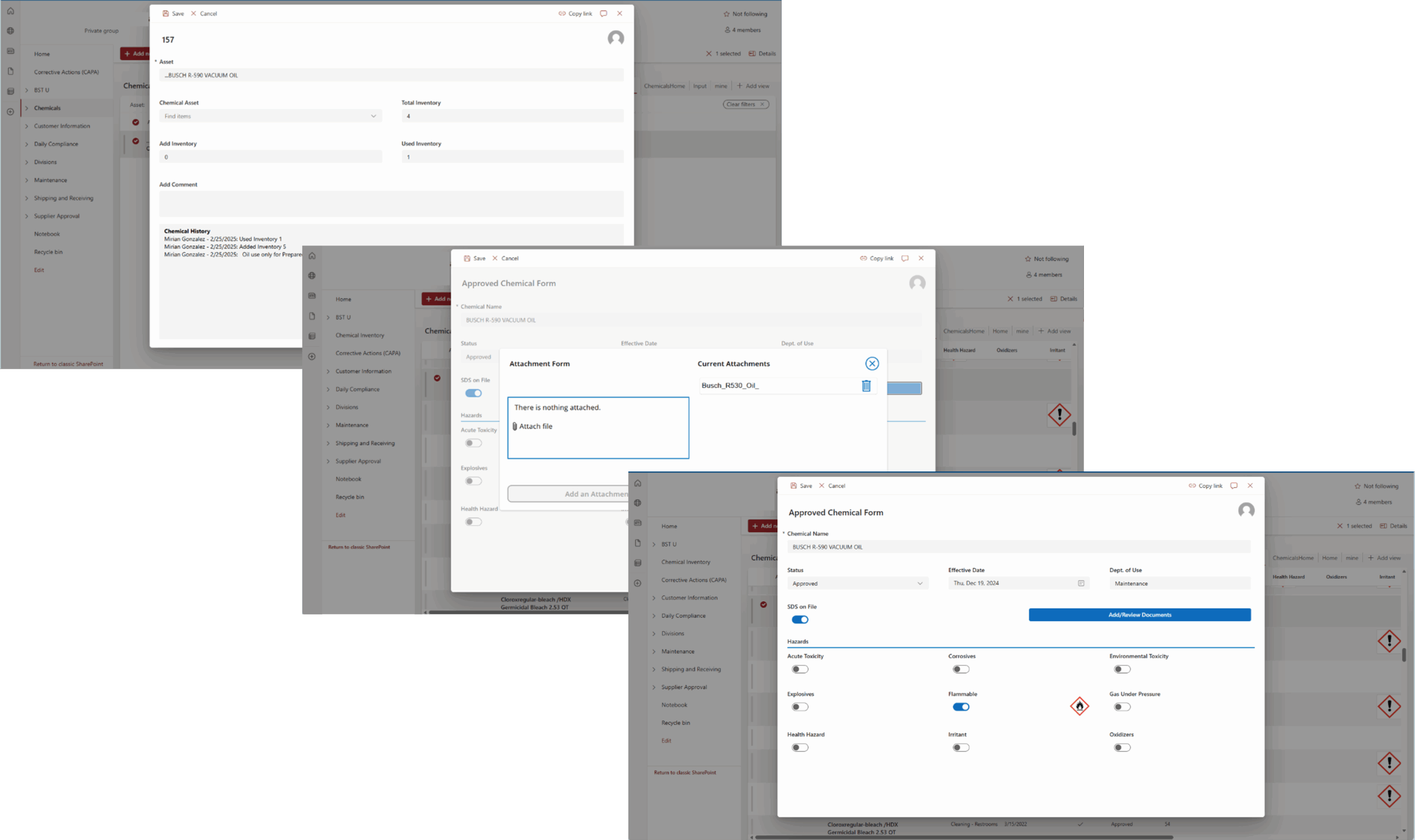
Chemical inventories are required for any organization using or managing hazardous chemicals in the workplace. They can be used to track inventory, communicate hazards, maintain Safety Data Sheets (SDS), and more. For companies using many chemicals, managing chemical quantities, historical usage, and associated documentation can be a challenge. KTL uses the Microsoft Power Platform to build and customize a Chemical Inventory Tool to replace scattered outdated systems, allowing organizations to more efficiently create inventories, track and manage chemicals, and meet regulatory compliance requirements.
Benefits: Why do you need it?
KTL’s Chemical Inventory Tool helps organizations using or managing chemicals to maintain compliance and streamline chemical management processes through:
- Managing Inventory: Maintains an accurate, up-to-date record of all chemicals onsite and their historical quantities.
- Centralizing Data Storage: Stores all chemical information in one location for easy access and consistency across sites.
- Communicating Hazards: Provides employees with quick access to chemical details, associated hazard information, and required personal protective equipment (PPE) for handling the chemical, reducing the risks of chemical handling and storage.
- Maintaining SDS: Connects chemical data to SDSs, helps ensure current versions are available, as required, and can store previous versions to meet the 30-year retention requirement.
- Streamlining Workflows: Creates workflows to manage chemical approvals, provide low supply reminders, and prompt regular chemical and SDS review.
- Reporting: Enables organizations to easily generate chemical inventories to comply with Tier III and Tier II reporting requirements and to provide to Local Emergency Planning Committees (LEPCs) and emergency response personnel.
Technology Used
- SharePoint or Dataverse
- Power Apps
- Power Automate

Comments: No Comments
KTL Safety Culture Article Featured in ASSP’s Professional Safety Journal
An organization’s safety culture is ultimately reflected in the way safety is managed in the workplace. Strong safety cultures have a number of key attributes in common that promote responsible safety and health practices and beliefs across the organization. When these characteristics come together, everyone wins. Benefits that can be expected include:
- Fewer incidents, losses and disruptions
- Improved employee morale
- Increased productivity
- Lower workers’ compensation and insurance claims
- Improved compliance with OSHA regulations and state occupational safety and health programs
- Improved reputation to help attract new or retain existing customers and employees
- Better brand and shareholder value
A safety culture action plan outlines the tools and strategies organizations can use to improve their existing safety culture and ensure that it is integrated with overall business goals, vision, and mission.
Read KTL’s full article, Creating a Safety Culture Action Plan, authored by KTL Senior Associates April Greene, CSP, CHMM, and Will Brokaw, MA, as published in the November 2025 issue of ASSP’s Professional Safety Journal.

Tech Corner: Contractor Safety Management Tool
Functionality: What does it do?
Many organizations rely on external contractors to help deliver products and services. However, using these contractors comes with inherent risks, especially when it comes to safety. Contractor safety management is vital in reducing operational risks, meeting regulatory requirements, and keeping contractors and employees safe. KTL’s Contractor Safety Management Tool supports multiple layers of compliance (e.g., site-level, contractor-level, and employee-level requirements) to help efficiently manage contractor safety requirements—from training, to document management, to proof of qualifications.
Benefits: Why do you need it?
A Contractor Safety Management Tool helps to streamline compliance by keeping all safety-related records in one web-based system, creating the following benefits:
- Maintains proof of qualifications and reduces associated risk by tracking expiration dates and sending reminders before certifications, insurance, or permits lapse (both at the company and individual levels).
- Improves operational safety by providing a centralized location for important safety documents and procedures, such as lockout/tagout (LOTO) procedures and access points.
- Simplifies audits and inspections by organizing safety records in a secure and easily accessible format.
- Efficiently tracks and manages pending, completed, and upcoming training and associated records to help ensure role-specific competency and demonstrate training compliance during audits.
- Increases transparency, enhances accountability, and promotes continual improvement regarding contractor safety performance.
- Maintains a consistent, structured process for completing contractor approvals, including sending notifications.
Technology Used
- SharePoint
- Power Apps (for custom forms)
- Power Automate (for email notifications)